

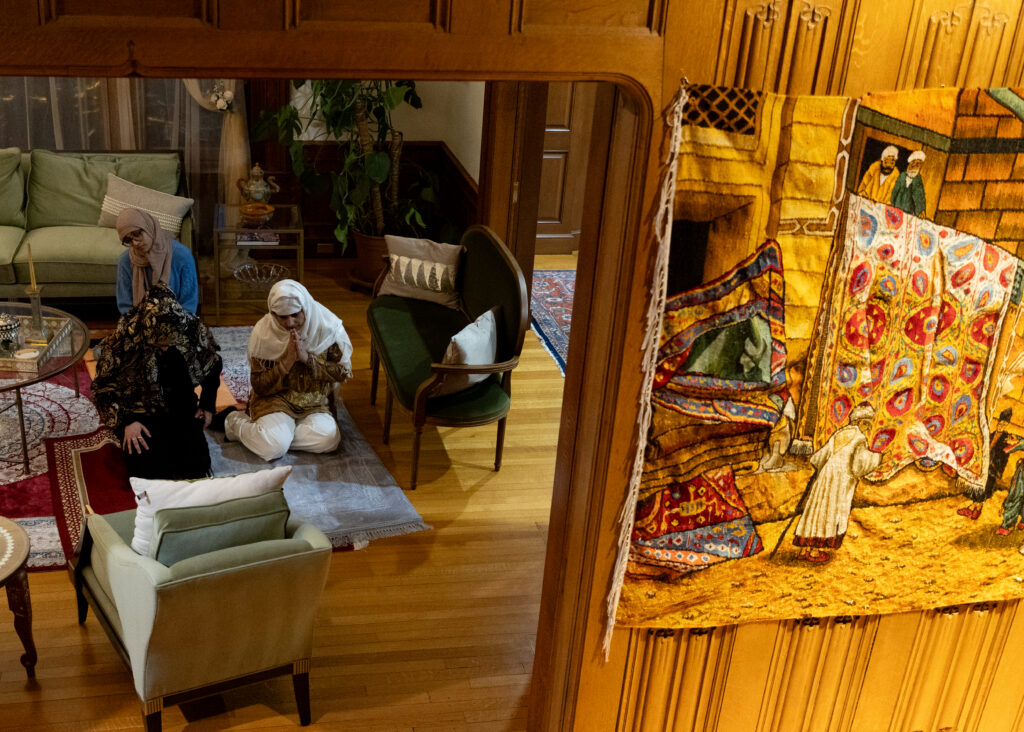
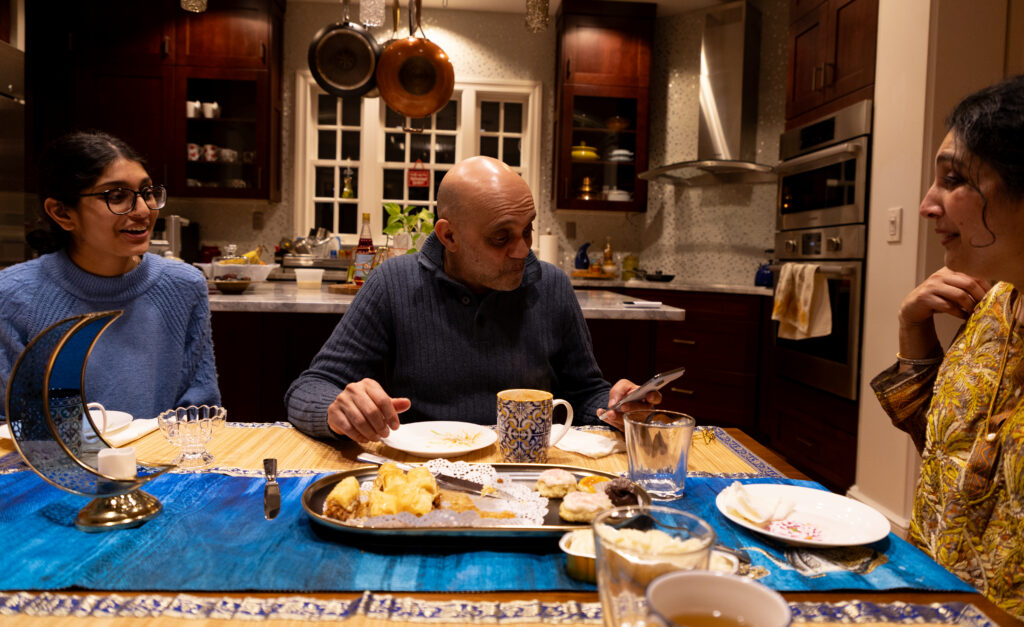
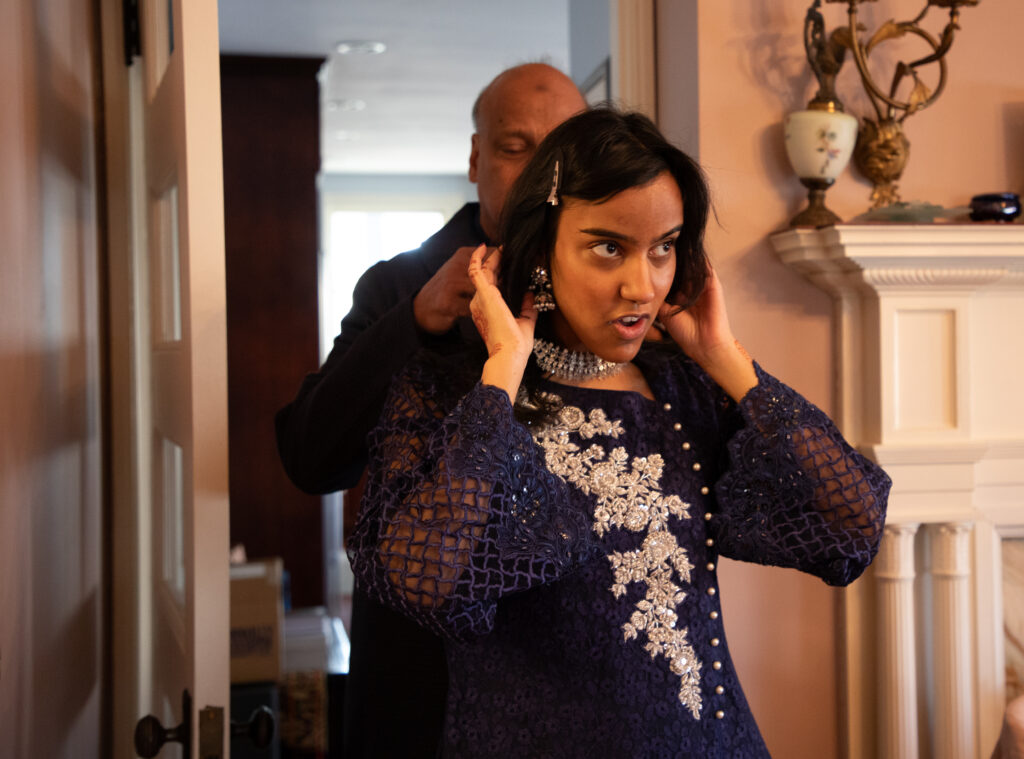



The sun had just set over Khadija Khan’s home, wood paneling glinting in the low light, the aroma of samosas and masala spice wafting into the living room. In the kitchen, her family prepared food for iftar, the breaking of the fast, chopping, heating, waiting.
“There’s a certain calmness that comes over you in this month,” Khan said.
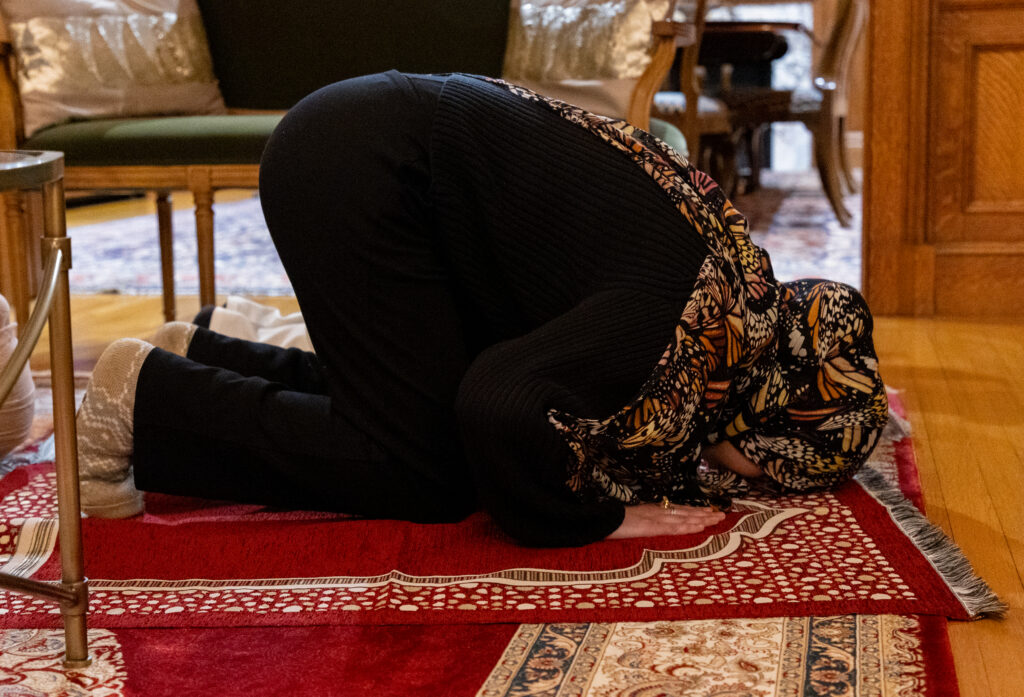
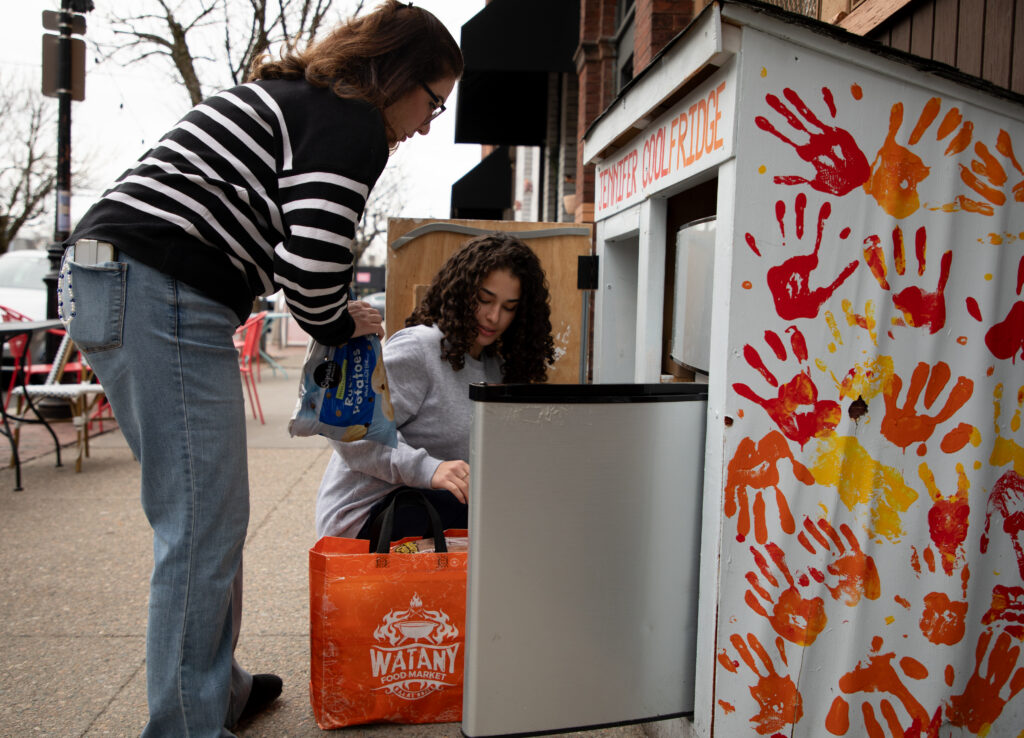
In the ninth month of the lunar calendar, known as Ramadan, Khan, along with nearly 2 billion Muslims around the world, adjust the rhythm of life to follow the sun’s path. While celebrated differently across cultures, the Ramadan fast is one of the obligatory five pillars of Islam. Observers abstain from food and water in daylight hours and are encouraged to devote more time to prayer and reflection, reading the Quran and giving to charity.
Sahar Mumtaz said she thinks that as the Muslim population in Brookline grows, so does the awareness of the month. Still, she said understanding of Ramadan is often surface level.
Her mother, Raana Mumtaz, co-leader of Brookline Muslim Friends, said someone once compared her observance to intermittent fasting.
“First I was puzzled, and second I was angry,” she recalled. “And then I said, No, no, that’s not what Ramadan is. Ramadan is a time where you put yourself in someone else’s shoes, who doesn’t have all the blessings you do on a daily basis. It’s a time where I’m very grateful for everything I have.”

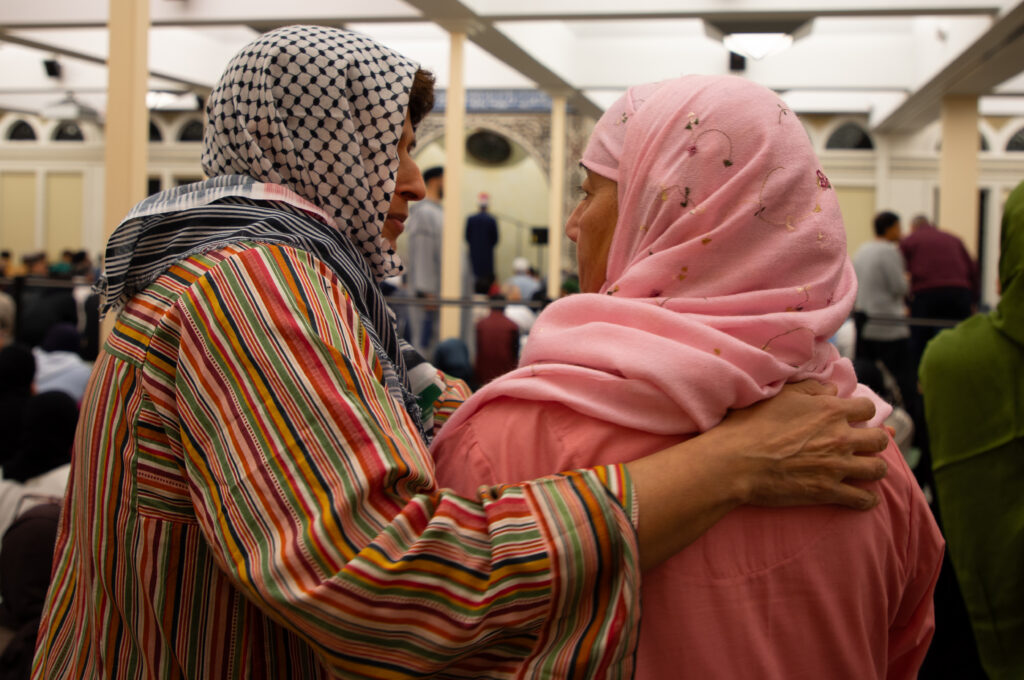
In a town that doesn’t have its own mosque, Muslims – who make up 2% of Brookline’s population – host an outsized sense of community. Brookline Muslim Friends began the month by welcoming around 200 residents to an interfaith community iftar, and continued holding weekly potluck style iftars throughout the month.
“Nobody eats alone for iftar during the month of Ramadan,” Mumtaz said.
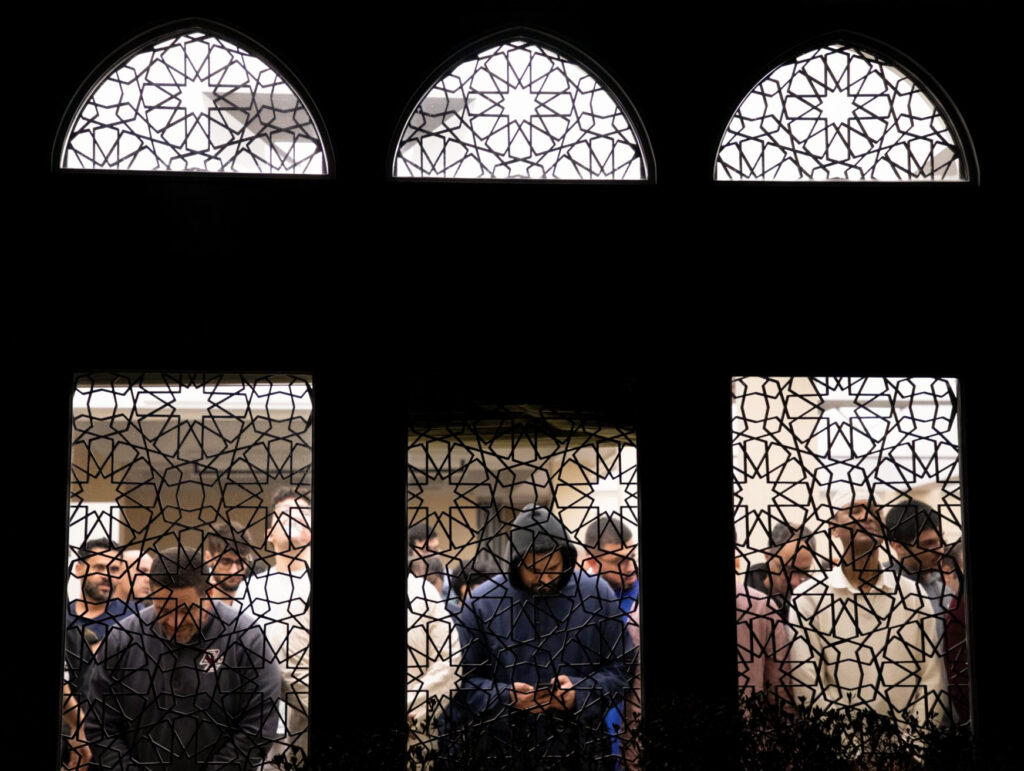
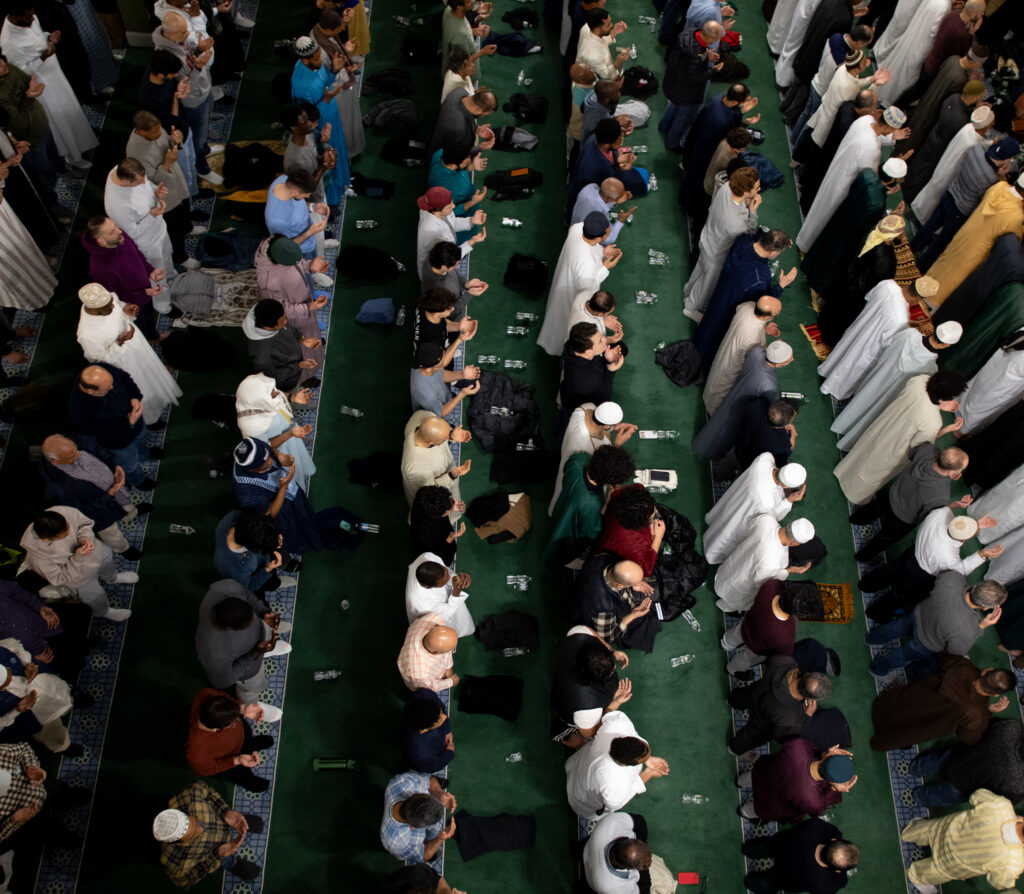
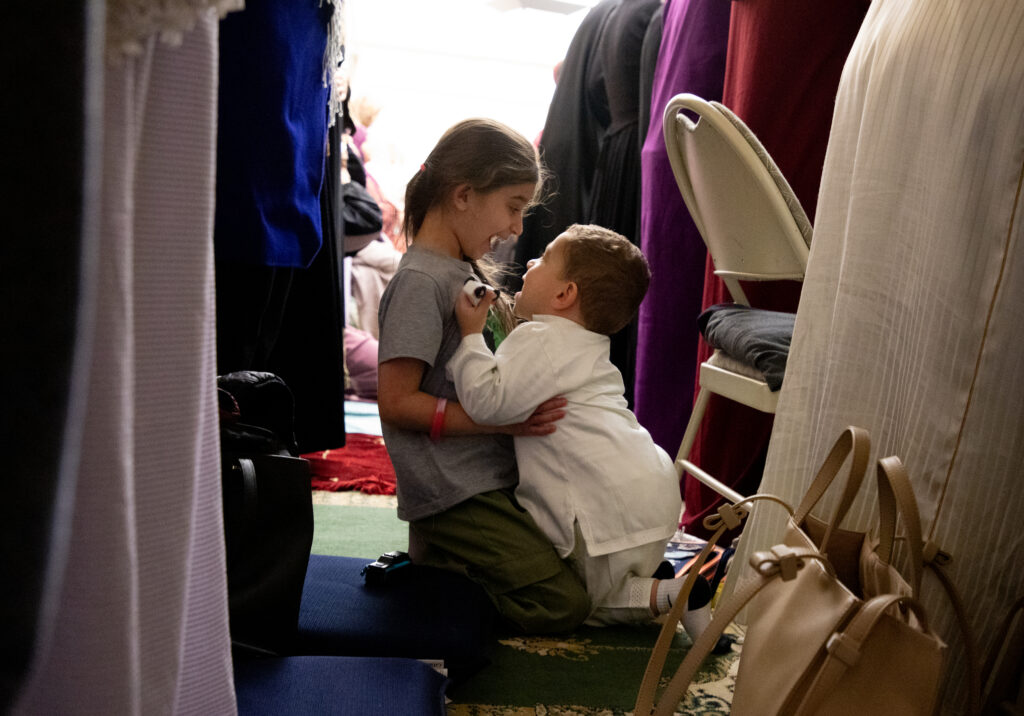
For many, the holiday centers around friends and family. Both Raana Mumtaz and her daughter said their favorite part of the month is gathering at nearby mosques for special late-night prayers called Tarawih, to listen to the recitation of the Quran.
“We’re fasting and exhausted, but we’re all together,” said Raana Mumtaz.
Fasting as an athlete
This exhaustion may have been most merited for Ibrahim Abdel-Dayem, a distance track athlete and high school junior at Brookline High School whose season conveniently coincided with almost the full length of Ramadan. But a cut-up sleep schedule, long fasts and academic demands of junior year did not hold him back from making it to indoor nationals with his relay team.
Before daylight savings, his typical day began around 4:15 or 4:30 in the morning, when he would wake for his pre-dawn meal, suhoor. On days he didn’t have early morning practice, he would catch another hour or two of sleep before going to school.
After a full day of classes and fasting, he headed to track practice, often involving intense workouts until around 5:30pm, go home to do homework before the evening iftar and prayer, continue his homework until he knocked out for the night, and repeat the cycle at 4 in the morning again.

After his first workout, Ibrahim wasn’t sure he’d make it. “I could feel myself lightheaded on the turns, feeling like I’m about to collapse,” he said. “At that moment, I was thinking, how am I going to do this? There’s no way.”
But he stuck it out. “Over time, a few workouts later, I started to adjust,” he said.
Behind the seemingly impossible, his family credits a complex smoothie his father, Essmaeel Abdel-Dayem, engineered for his son’s pre-dawn meal.
“Essmaeel’s a physician,” said Ibrahim’s mother, Mona Mowafi. “He’s become like Ibrahim’s personal nutritionist.”
Loaded with a variety of carbohydrates designed to release at different times throughout the day, the smoothie needed to keep the athlete going for over 12 hours.
“We were really wanting to make sure that he wasn’t depleting himself,” said Mowafi.
Still, Ibrahim was cautious. “I thought that if I told Coach I was fasting, he was going to have a negative reaction, maybe, like, swap me out for a different athlete,” he said, “but he actually was very supportive.”
As were his teammates, he said. “They respected it a lot.”
Without his knowledge, his team captain, Harry Flint, even talked their coach into coordinating practices to have a later start in the morning to accommodate Ibrahim’s sleep and fasting schedule.
But beyond the laboratory-grade smoothie and support from his family and teammates, Ibrahim said it was a mental effort. He circled back to the meaning of Ramadan – to be thankful for what you have and empathize with those who aren’t as fortunate.
“No one ever actually runs to the best of their ability. You can always run faster,” he said. “If you’re really motivated and committed, and you’re all in with your mentality, you can still perform as if you aren’t fasting.”
On the day of the race, he said he felt confident. He’d made it through the New England championships with his fastest time ever, and his relay mates trusted him. They placed 9th nationally.
“I hope any athlete who comes after me can see that you can compete at your best while fasting,” he said. “It’s not something that has to hold you back. It can be something that makes you stronger.”
‘There’s nothing else in the world like Eid’

“There’s nothing else in the world like Eid.”
That’s how Zaina Kahn, an undergrad studying abroad in Dublin, described the day of feasting and celebration that marks the end of Ramadan.
For the first time in Brookline’s history, schools closed for Eid al-Fitr on Friday, after the School Committee voted to officially designate the day as a “Category I” holiday last year.
Sofia Sideeka, a BHS student, said her classmates were suddenly aware of the holiday, asking her what the day is about. “I like when people ask questions,” she said.
Students and parents described the news of the day off as “a relief.”
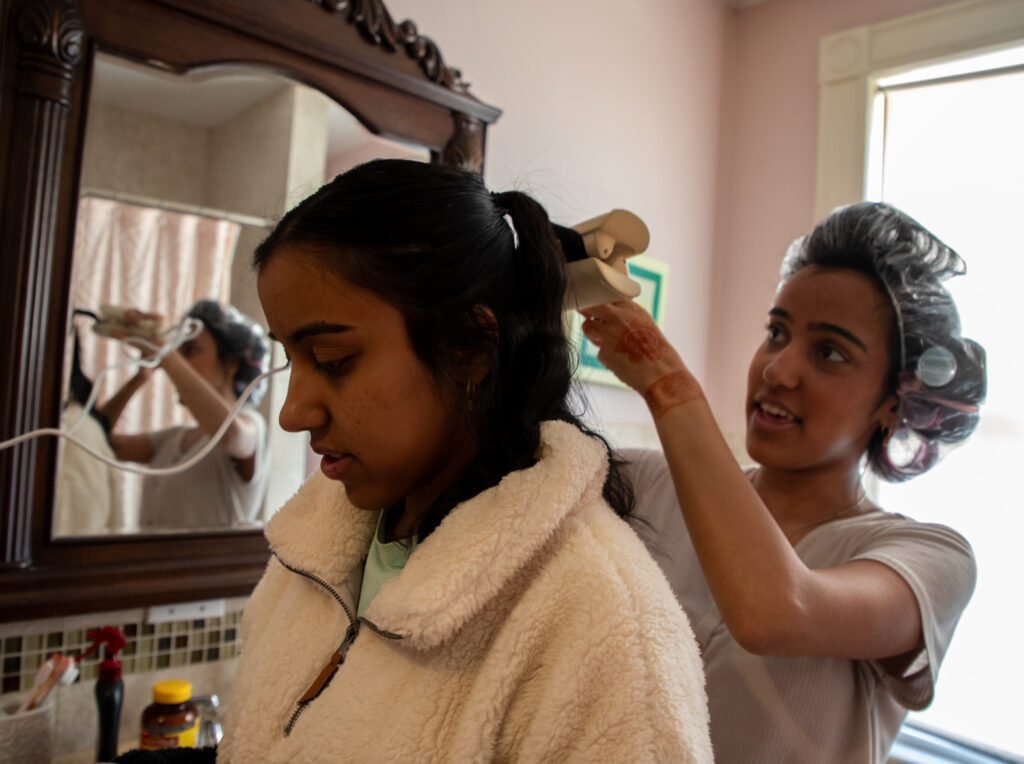
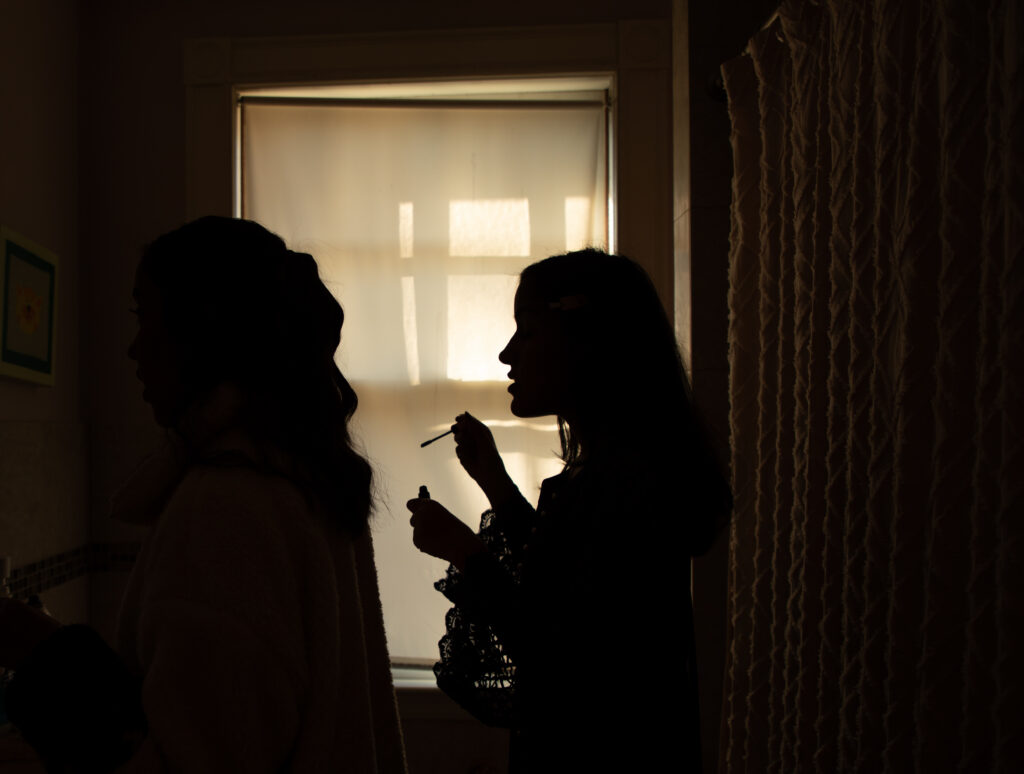
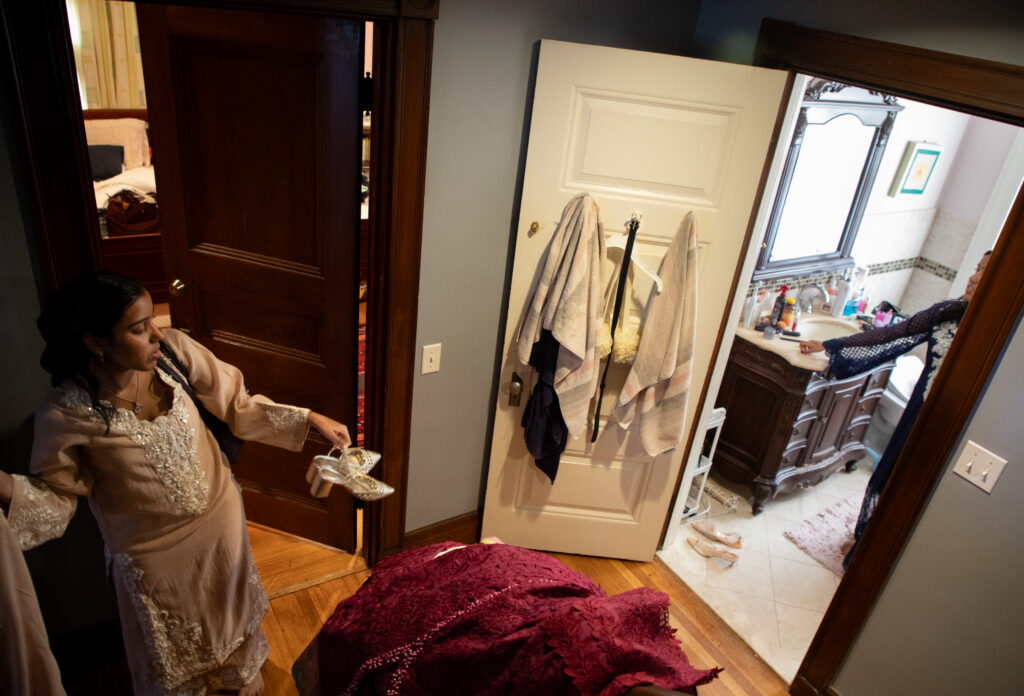
In the days leading up to Eid, Brookline families made trips to the Logan Airport to retrieve family members arriving from all over the globe. It was a frenzy of last-minute preparations, Zakat payments, beauty regimens, cooking, freezing – everything except sleeping.
The day begins early in the morning for prayer, followed by an endless ordeal of “brunch hopping” and a much-needed afternoon nap. The twin daughters of the Wayland mosque president, Faiza Khan, didn’t get a break. “We don’t get home til 10 p.m.,” said Zaina Khan.
‘A day based around joy’

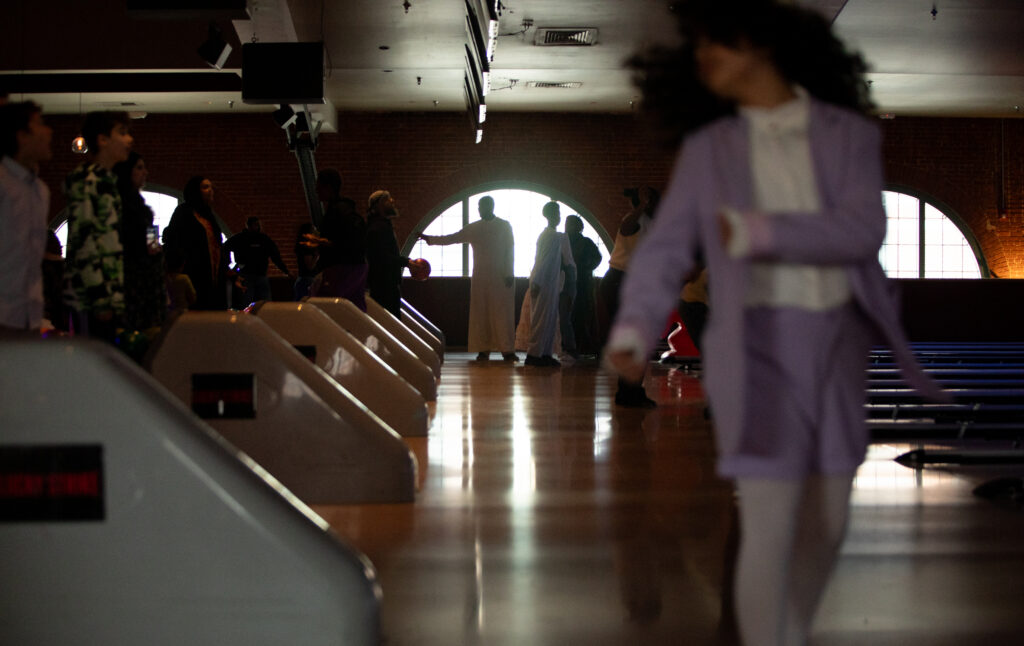
Essmaeel Abdel-Dayem sits back, observing the scene before him. He is at Lucky Strike in Fenway, where Brookline families have booked most of the top-floor bowling alley. In the back, his son Ibrahim plays pool with his cousin and classmates. Abdel-Dayem said it was “heartwarming” to see his kids finally able to enjoy the day freely. “Many of them wouldn’t be here if they had school,” he said.
“With everything going on in the world, I feel like it’s hard to give yourself permission to just let go.”
It hurt him, he said, to see the way the Muslim community is so often viewed through the lens of politics, regardless of the occasion.
“I was born here. I’ve lived most of my life here. We are members of the fabric of America, just like everyone else,” he said. “I don’t want every story about us living our lives here, and our children living their lives in the only home they’ve ever known, to always somehow be viewed through a lens of American foreign policy.”
He gestured to the friends and family celebrating around him. “Experiencing joy on this day is pushing back against all of that,” he said.
As he spoke, a woman came by to offer a slice of pink frosted cake, which he turned down. Minutes later, the cake appeared by his side anyway.
“I would like for this day to be based around joy. I want our community to be based around joy, and I want Brookline to be based around joy,” he said. “That’s what Mona and I have always wanted for the place that we’ve chosen to live for the longest.”
This story is part of a partnership between Brookline.News and the Boston University Department of Journalism.
Correction: A previous version of this article misspelled Harry Flint’s name. The article has been updated.