
Tag: Cambridge

  • Summer jobs program for teens in Somerville now accepting applications

    A 2018 photo of beautification efforts around Jerry’s Pond. Pictured are Eric Grunebaum of The Friends of Jerry’s Pond, second from left, and teens from the Mayor’s Summer Youth Employment Program, among others.

    Applications are open for Somerville’s annual summer job program for teenagers.

    The application for the Mayor’s Summer Jobs Program is available until April 30. Students must be 14 years or older by May 4 and live in the city or attend school in Somerville to be eligible. Students graduating this summer are also welcome to apply. Most placements run for six weeks over the summer from July 6 to Aug. 14, and all pay $18.85 an hour.

    “It’s a very competitive program because there is a lot of interest in it,” Youth Services Director Caitlin Kelly said. The city receives hundreds of applications each summer. “We’re only able to place close to 200 teens each year.”

    There are more than 30 job placements this summer across over 20 city departments and Somerville Public Schools, as well as some external placements enabled by grant funding, said Kelly. Those include positions with Mystic Learning Center, VillSide Customs, Somerville Media Center and Parkour Generations.

    Office hours will be held Wednesday, April 8, from 2-4 p.m. at Somerville High School for teens wanting application guidance. There will also be an interview workshop April 29 from 2-3 p.m. at the high school. Interviews are expected to begin May 4, with onboarding in early June. Students are permitted to work up to 20 hours per week.

    The city has run the mayor’s summer jobs program for over 25 years, but previous initiatives with similar goals existed, Kelly said. It aims to provide area youth with career advancement opportunities and skill development.

    The city of Cambridge runs a similar program, the Mayor’s Summer Youth Employment Program. Its applications are open April 15 to May 8.

    This story is part of a partnership between Cambridge Day and the Boston University Department of Journalism.

  • Giving patients a say in sharing their health data

    Giving patients a say in sharing their health data

    Some patients want more control over their health data. Cambridge Health Alliance’s Hannah Galvin is working to help.

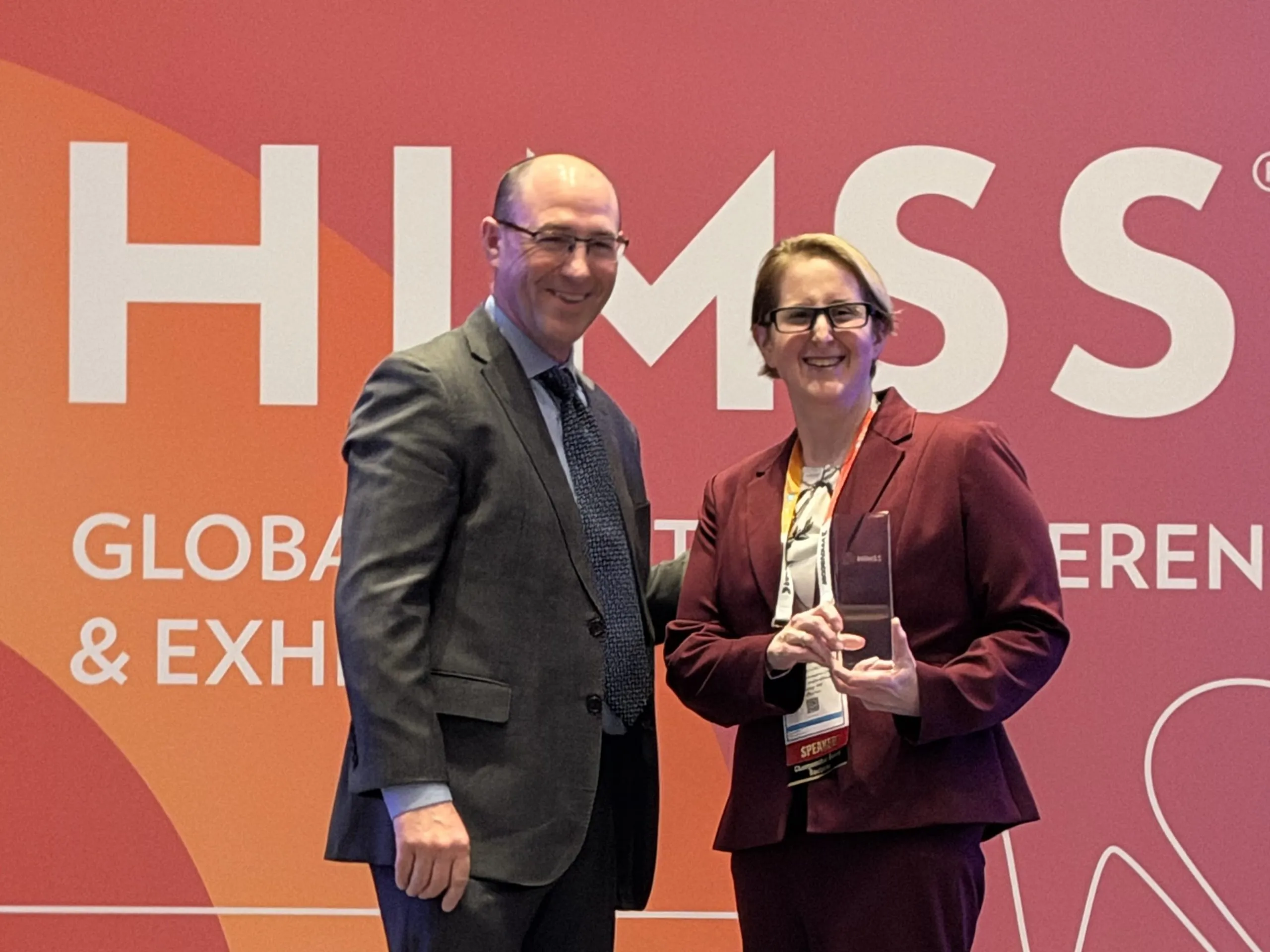
    Hannah Galvin (right) at the 2026 Healthcare Information and Management Systems Society Global Health Conference with Tom Leary (left), senior vice president and head of government affairs at HIMSS. Credit: Courtesy of Cambridge Health Alliance

    The push to make patient data easier to share across health systems has exposed a gap, as most systems still lack a way for patients to control how their information is used.

    When a patient walks into an emergency room, their medical history can arrive before they do. For some, that means faster, better care. For others, it can mean being judged before they are treated.

    That tension is at the center of the work of Hannah Galvin, chief health information officer at Cambridge Health Alliance, a community-based health system serving Boston’s metro-north area. She recently received a national Changemaker Award from the Healthcare Information and Management Systems Society for her work on patient data sharing.

    “My work is about balancing access to information with patient privacy,” Galvin said. “Right now, we’ve built systems that move information easily, but they don’t always account for how that information affects patients.”

    For health systems, sharing data is now a core part of care. Doctors rely on it to see medications, allergies and past diagnoses without having to start from scratch.

    “When a patient comes in, we already have a baseline understanding of who they are,” said Jeannette Currie, the alliance’s senior vice president and chief information and digital officer. “That builds confidence in the care they receive, because they don’t have to repeat everything from the beginning.”

    Worrying about health TMI

    That lack of control can have consequences for patients, particularly those with sensitive health histories. Galvin said she saw that firsthand while working with homeless and at-risk youth through Bridge Over Troubled Waters in Boston, where some hesitated to seek care because of how their information might be viewed.

    “They were worried about what was already in their record and how it would be interpreted,” she said. “Some would tell me they didn’t want to go to the emergency room because they thought providers would see their history and make assumptions about them.”

    In some cases, that hesitation appeared when patients needed urgent care. Galvin said patients especially with a history of substance use worried their records would lead providers to dismiss their symptoms.

    “They would tell me, ‘They’re going to see that and assume I’m just drug-seeking,’” she said. “Even when something else was going on, that history shaped how they expected to be treated.”

    Part of the issue is how systems handle data sharing. In most cases, patients can either allow their information to be shared or block it entirely, with little room in between. That leaves those concerned about privacy with a difficult choice: share everything or risk providers missing important details.

    Standard setting for data sharing

    To address that gap, Galvin co-founded Shift Collaborative, a group working to develop standards that give patients a greater say in how their health data is shared. The aim is to allow people to choose which information is shared and with whom, without limiting access to care, reflecting a broader shift in how the industry is approaching data use.

    “If the system is all or nothing, then it’s not working for everyone,” said Amit Trivedi, director of communications and partnerships at Shift Collaborative. “The people who may need that data sharing the most are often the least likely to use it.”

    Adoption is in its early stages. Much of the work remains behind the scenes, as health IT vendors and policymakers decide how to incorporate these changes into existing systems.

    “We’re getting to a point where this can start showing up in real-world settings,” Galvin said. “This has been something the industry has avoided for a long time because it’s hard to do, but that doesn’t mean it shouldn’t be done.”

    Working to get adoption

    Unlike many efforts in the health tech space, Shift is not developing a product or selling a service. The nonprofit has relied largely on volunteers so far, with plans to grow through grants, partnerships and training.

    That structure means its impact depends on whether others choose to use it.

    “The goal is to make sure the benefits of data sharing actually reach everyone, not just the people who are already comfortable with the system,” Trivedi said. “We can build the framework and show that it works, but it only matters if it’s adopted across the system.”

    The challenge now is turning that framework into something widely used, as health systems continue to expand data sharing faster than they build in ways for patients to control it.

    “We’ve spent years building systems to move data,” Galvin said. “The next step is making sure patients have a real say in how that information is used.”

    This story is part of a partnership between Cambridge Day and the Boston University Department of Journalism.

  • Clover restaurant chain seeks a rescuer, may shut down

    Clover restaurant chain seeks a rescuer, may shut down

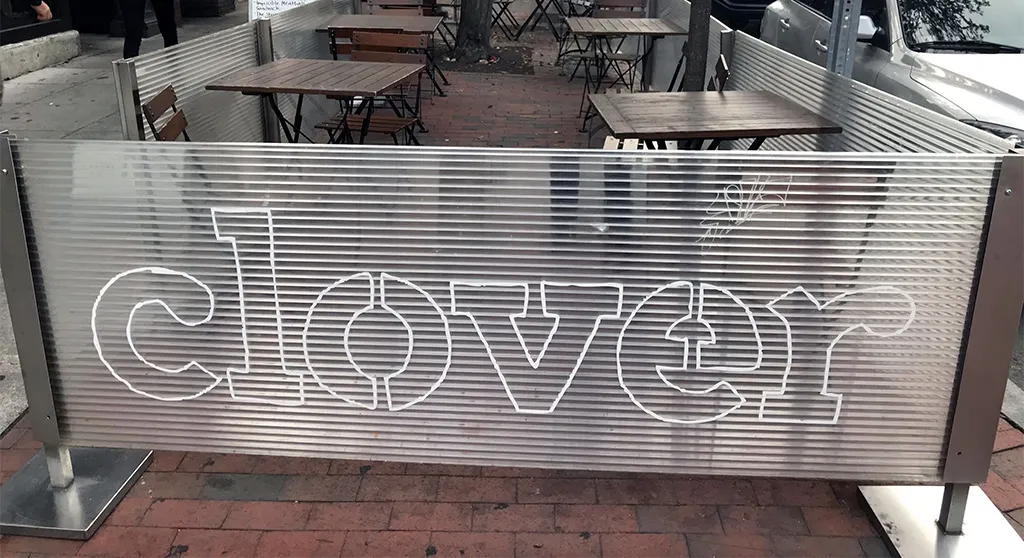
    Clover Food Labs, a Cambridge-based fast-casual vegetarian chain, may close all locations and lay off over 180 employees if it can’t find a buyer before June.

    According to a March 30 notice filed with the state, all 182 of Clover’s workers, including executives, will be laid off May 29 if a buyer is not secured before that date. Some employees will work for a limited time after the closure, states the notice, filed by Clover’s people operations director Maureen McSweeny.

    Companies with more than 50 employees are legally required to file a report with the state before a mass layoff or business closing and provide workers with 60 days’ notice.

    In response to an interview request from Cambridge Day, the company sent an unsigned statement that read: “We simply want to comply with all regulations. We are optimistic that Clover will continue to serve our locally sourced farm-to-table fast food in our company’s next chapter.”

    Julia Wrin Piper samples food in the Clover’s kitchens in 2022, when she was chief operating officer. Credit: Clover

    Clover has 11 locations across Greater Boston, with five in Cambridge. It began as a food truck run by founder Ayr Muir in 2008. Muir was succeeded as CEO in 2023 by then-chief operating officer Julia Wrin Piper. Wrin Piper was COO of Somerville’s Aeronaut Brewing Company before joining Clover.

    Neither Muir nor Wrin Piper responded to multiple emails requesting an interview.

    The company previously filed for Chapter 11 bankruptcy, stating that it could no longer pay the leases on multiple locations, The Boston Globe reported in 2023. At the time of the filing, Clover employed roughly 260 workers, according to the Globe. It exited bankruptcy less than six months later, with 13 stores and plans to expand to 60 locations.

    Restaurant employees were sent an internal message to “not share any info” with reporters, and said they could not speak with Cambridge Day, citing the message.

    “We cannot share further information at this time,” the emailed statement reads.

    Clover was part of the offerings on hand at Eastern Edge when the food hall opened in February. Credit: Tom Meek

    The chain prioritizes locally sourced ingredients and a plant-based approach to reduce its carbon footprint, according to its website. For vegetarians like Upala Kalim, 34, of Wakefield, Clover provides several options that might not otherwise be available.

    “I think it meets my needs,” she said. “It definitely caters to the kind of food I like.”

    Brian Forbis, 36, cited Veggie Galaxy in Central Square and Life Alive Organic Cafe as restaurants with large vegetarian menus. Forbis brought Kalim to Clover twice. He enjoys the rosemary fries.

    “It’s always been reliable,” said Forbis, a regular customer. The restaurant’s food truck was often parked near a job Forbis previously had in Watertown, and he would get lunch there. “It’d be hard for some other place [to] expand to the footprint that Clover’s had.”

  • A Cambridge teen is the nation’s best junior épée fencer

    A Cambridge teen is the nation’s best junior épée fencer

    Natalya with her silver medal in the Cairo Junior World Cup Credit: Mohamed Mostafa

    Sophomore at CRLS will compete in the world championships

    A 16-year-old Cambridge resident has become one of the nation’s top-ranked fencers. Now she’s preparing for the world championships next month in Brazil.

    Natalya Cafasso ranks first in the United States in both the junior (under 20) and cadet (under 17) categories in épée. Épée is the only blade in fencing for which the whole body is the target, unlike the two other blades, foil and sabre.

    For her, competing at the 2026 International Fencing Federation Junior & Cadet World Fencing Championships is a dream come true. She has been fencing since she was 6 years old and competing since she was 13. “It feels amazing. I never thought I would be in this position,” said Cafasso, a sophomore at Cambridge Rindge & Latin School. “Representing USA is a big deal, and it feels amazing that I can represent my country at the highest level.”

    On top of her dominance in the U.S. junior and cadet categories, Cafasso is ranked seventh in the world in junior women’s épée and 13th in the U.S. in senior women’s épée. 

    Even with her experience, the opportunity to represent the U.S. at one of the highest levels of fencing is a daunting task. Regardless of the pressure, Cafasso wants to stay focused.

    “It’s always a lot of pressure, because you travel all that way for one event, but I try not to think about it at all. I try to be present in the moment,” she said. “The results don’t matter as much to me. Obviously they matter, but it’s not like hanging above me, like I need to do this.”

    Natalya facing off in tournament competition. Credit: Mohamed Mostafa

    Cafasso had a rocky start to the season, but over the last five months she found success. She has reached the podium in her last four competitions, bringing home a silver and three bronze medals.

    She sees this run as a “butterfly effect.” Before her four medals, she narrowly made the U.S. roster for the junior world cup in Hong Kong in November.

    “If I never qualified for that competition, none of this would have happened,” said Cafasso. “I think that’s really interesting to look back on, because my whole entire life would have been different if I didn’t make that one competition.”

    Even though she placed 22nd in the competition, just having the opportunity to be on the team and compete showed her she belonged. 

    Daniel Hondor, Cafasso’s coach at the Olympia Fencing Center, noticed a shift in her attitude after the competition in Hong Kong. Ever since then, her game has taken a step up.

    “Before the first one, she was, ‘Am I ready for this? Do I belong there? Do I not belong there?’ and once she actually made the first bronze in Spain, she got the confidence and maturity that she needed,” Hondor said. “Once she convinced herself that she belonged, she mastered it.”

    Hondor and Cafasso have put in countless hours of work and training to get her to where she is. Cafasso spends five to six days a week at the Olympia Fencing Center working on her craft.

    Natalya celebrates after a win. Credit: Mohamed Mostafa

    Aside from fencing, Cafasso holds a 4.0 GPA at CRLS. When she’s not competing, training or traveling, she spends her time studying and catching up on work. She often studies on overnight flights and in the airport. 

    Regardless of the outcome in Rio, Cafasso is striving for an even bigger goal in her future – the Olympics in 2028.

    “The Olympics are very much the goal,” said Martin Cafasso, Natalya’s father. “At this point, she’s 13th in seniors, with two years to go before L.A.. It would be still a long shot for an 18-year-old, particularly in épée, to get there, but she feels like she can do it.”

    This story is part of a partnership between Cambridge Day and the Boston University Department of Journalism.

  • Cambridge company helps White House track drug usage trends through wastewater

    Cambridge company helps White House track drug usage trends through wastewater

    MWRA’s Deer Island Wastewater Treatment Plant in Boston, Massachusetts. Credit: Courtesy of Massachusetts Water Resources Authority

    Biobot Analytics has a contract with the Office of National Drug Control Policy.

    A Cambridge wastewater analytics company is working with the White House to analyze wastewater data that helps monitoring drug use nationwide.

    Biobot Analytics is providing the White House Office of National Drug Control Policy with wastewater data from communities across the country to help identify emerging substance use trends. Federal spending records show the project began in September 2025 under a one-year contract worth $615,700.

    Wastewater epidemiology analyzes sewage samples at treatment facilities where researchers can estimate levels of drugs such as fentanyl or cocaine used across entire cities.

    “The goal of wastewater epidemiology is to understand community-level health,” said Marisa Donnelly, director of epidemiology at Biobot Analytics. “If you want to know how healthy a community is, you can look at wastewater to understand what viruses, pathogens or substances are circulating.”

    Compared with traditional public health reporting methods, the biggest advantage of wastewater data is speed. Because traces of substances appear in sewage shortly after they are metabolized, researchers can detect changes in community drug use within days.

    “If you’re a local health department trying to track overdoses in your community, you might not get those numbers until months later by clinical reports or toxicology data,” Donnelly said. “With wastewater, we can see those trends within business days, allowing communities to understand what’s changing much earlier than traditional data sources.”

    According to the U.S. Centers for Disease Control and Prevention, the agency’s National Wastewater Surveillance System collects data from about 1,500 monitoring sites across the country each week. Biobot’s federal partnership focuses specifically on tracking substances linked to drug use, including opioids such as fentanyl and stimulant drugs.

    Cambridge Day reached out to the White House Office of National Drug Control Policy to ask how Biobot was selected and what the agency hopes to achieve through the partnership, but did not receive a response.

    Biobot, founded by researchers at the Massachusetts Institute of Technology and based in Cambridge, has analyzed wastewater samples for public health monitoring in Massachusetts.

    “We have a network of sites in Massachusetts that we work with regularly, and those communities send us wastewater samples that we analyze to track trends,” Donnelly said. “Expanding that network is really important so that communities across the country are represented and can see what’s happening in their own data.”

    Donnelly said the data can help public health officials detect shifts in drug consumption earlier and decide where treatment resources may be needed most, rather than responding only after problems emerge.

    “Sharing that data nationally allows public health partners to see changes in substance use earlier and respond more quickly,” she said.

    Because wastewater samples are collected at treatment facilities serving thousands of residents, the data reflects trends across entire communities rather than individual behavior.

    “Wastewater is inherently anonymous,” Donnelly said. “When we sample at a wastewater treatment facility, we’re collecting wastewater from thousands of people at once, so we can’t identify individuals. We can only track trends in community substance use.”

    Beyond drug monitoring, wastewater analysis can also track a range of infectious diseases circulating in communities. Researchers can test sewage for viruses such as influenza, respiratory syncytial virus and measles, allowing public health officials to monitor outbreaks even when many cases go unreported.

    “Wastewater is probably best known for how it was used to track COVID-19,” Donnelly said. “People shed viruses through bodily fluids even before symptoms appear, which means wastewater can sometimes detect rising infection levels before cases appear in traditional reporting systems.”

    As wastewater monitoring expands nationwide, public health officials may increasingly use the technology to identify emerging health threats, from infectious disease outbreaks to shifts in drug use.

    “What wastewater really gives us is a way to see what’s happening in community health in near real time,” Donnelly said. “Our goal has always been to give communities a clearer, faster picture of what’s happening in their population’s health.”

    This story is part of a partnership between Cambridge Day and the Boston University Department of Journalism.

  • Local pharmacies adapt, push back against corporate stores

    Local pharmacies adapt, push back against corporate stores

    As the pharmacy business has shifted, smaller stores have closed and corporations like CVS and Walgreens have taken over. But Robert Skenderian, third-generation owner of Skenderian Apothecary, says these chains aren’t his biggest competitor: It’s benefit management companies, also known as pharmacy benefit managers (PBMs).

    Skenderian and his two brothers, like their father and grandfather before them, have been serving communities in Cambridge and beyond from the corner of Cambridge Street and Roberts Road. For more than 60 years they’ve filled prescriptions, provided medical supplies and given medicinal advice. But as the years pass, small, locally owned pharmacies like theirs are grappling with a system that benefits large corporations and drives traditional pharmacies to closure.

    “The absolute number of pharmacies in the country are shrinking across the board. Whether you’re a chain store, whether you’re independent, there are fewer and fewer every day because they can’t afford to stay in business,” Skenderian said. “It’s going to continue to happen because the benefit management companies don’t really care whether you can get your prescription filled or not. They only care that they get to keep all of the pie.”

    The PBMs serve as middlemen between insurers, drug companies and pharmacies. They hold major responsibilities — negotiating rebates and discounts with manufacturers, handling claims, developing lists of covered medications for different plans. PBMs also reimburse pharmacies after dispensing patient medications.

    Massachusetts has 38 licensed PBMs. Three of them manage nearly 80% of the prescription drug claims in the United States: OptumRx, a subsidiary of UnitedHealth; CVS’s Caremark; and Express Scripts, a subsidiary of Cigna. Each of those PBMs has a vast pharmacy network in specialty and mail-order pharmacies, or in retail and grocery store locations, where they funnel customers insured by their parent companies to fill their prescriptions. This cuts out locally owned and operated pharmacies.

    “[The PBMs have] really integrated themselves vertically up and down,” said Todd Brown, executive director of the Massachusetts Independent Pharmacists Association. “They have an incentive to keep the business within their own system.”

    Small pharmacies have attempted to negotiate with PBMs in the past, but they have no leverage against the dominance of the top three, Brown said.

    “For me to be successful, to be able to stay in business, to be able to take care of people, in some ways it’s against everything I was taught growing up,” Skenderian said. “People come with a prescription. You want to fill it. You want to help them out. You want to make sure they get the medicine. You want to make a little money, and then everybody’s happy. And you can’t do that anymore.”

    Every time he fills a prescription, Skenderian said, the PBM for a customer’s insurance plan pays him back for less than the medication is worth, sometimes as little as half the cost.

    Skenderian said he has to be “defensive” with how he runs Skenderian Apothecary. He no longer takes many insurance plans he did in the past that now pay him at a major loss, and he fills far fewer prescriptions than he used to.

    “[PBM’s will] pay a different amount to the pharmacy for the exact same claim,” Brown said. “Pharmacies have been forced to limit their participation, limit taking certain insurers so that they cut out the insurers that pay them the least amount.”

    “Claims that CVS Caremark favors large network pharmacies over independent pharmacies are simply not accurate,” CVS Caremark spokesperson Shelly Bendit wrote in an emailed statement. “In Massachusetts, CVS Caremark reimburses independent pharmacies at higher rates than CVS Pharmacy for brand, generic, and specialty medications.”

    Skenderian conceded that CVS Caremark could reimburse independent pharmacies at higher rates than CVS locations. However, the lack of transparency about PBMs’ negotiations with drug manufacturers could still make Caremark’s reimbursements unfair. For instance, a PBM can charge an insurance company more than it pays a pharmacy, a tactic called “spread pricing.”

    Such pricing generated estimated income of $1.4 billion from 2017-21 for the three largest PBMs, according to the Federal Trade Commission. Much of that income came from dispensing commercial prescriptions through unaffiliated pharmacies like Skenderian Apothecary. CVS Health is the parent company of insurer Aetna, Caremark and its retail pharmacies.

    “It’s not a very fair system, but it’s the system we work under,” Skenderian said. “They can manipulate things any way they want. It’s impossible to get to the bottom of this, of what is truthful or not, because they will not give that information.”

    Pharmacy deserts

    In the past several years, the number of all pharmacy locations have shrunk around Massachusetts and nationwide. The state has lost nearly 200 pharmacies since 2019, a 17% decline, according to data published in October 2025 from the Massachusetts Health Policy Commission. Over 1 million Massachusetts residents live in pharmacy deserts or “near-deserts” by the MHPC’s standards.

    Within the study, 2024-25 saw the smallest number of openings and largest number of closings of any time period. A Walgreens store in Cambridge’s Central Square closed in March 2025 because it was an unprofitable location, a common story for many CVS and Walgreens stores that have closed in recent years.

    Skenderian Apothecary and Inman Square Pharmacy are the last independent, locally owned pharmacies in Cambridge. The most recent independent pharmacy to close was Ciampa Apothecary, according to the Massachusetts Department of Public Health. Ciampa moved in 2015 to Peabody and operates as North Shore Home Medical Supply and Home Care Pharmacy.

    “Pharmacies have closed mainly because of the pharmacy benefit managers,” Brown said. “They underpay the pharmacies, overcharge the health plans and keep the difference.”

    “Pharmacies can go out of business for many reasons. PBMs are working to help rural, community pharmacies by paying them more than retail chain pharmacies,” said Greg Lopes, spokesperson for the Pharmaceutical Care Management Association, in an emailed statement.

    Brown suggested there might be other ways for pharmacies to recover the loss on filling prescriptions by offering vaccinations or services and products not usually available at a typical chain store. Skenderian can create compound medications to meet more patient-specific needs than a typical commercial prescription. Other pharmacies may offer specialized medical equipment that would be difficult to find elsewhere.

    Day to day, however, many customers choose a local pharmacy for a more personalized experience and higher standards of service.

    “They take care of you,” said Patricia Mazza, a longtime Skenderian customer. “They also give you good advice on how to use the drug, which you don’t get everywhere, right?”

    In a more long-term effort, Brown and the independent pharmacists’ association are advocating for a bill in the state legislature that would improve conditions for pharmacies across the board. The bill – H.4346, “An Act to Ensure Access to Prescription Medications” – would allow pharmacies to contest PBMs on the cost of drugs and require PBMs to provide pharmacies with detailed reasonings for those costs, match reimbursements among pharmacies regardless of affiliation and reimburse for medications at a rate matching the pharmacist’s expenses. The Joint Committee on Health Care Financing is expected to report on the bill by March 18.

    The federal government has also acted recently on PBM reform. Congress passed bipartisan legislation Feb. 3 that sets standards for how PBMs interact with Medicare plans. It would permit any pharmacy to join an insurance company’s network after meeting standard requirements, a specific benefit to local stores. It also requires a PBM to deliver detailed data to insurers and pharmacies on its prescription drug spending and enables pharmacies to report potential contract violations by PBMs. The plans are expected to go into effect by Jan. 1, 2028.

    “I think it will have a positive effect. The problem is, is it doesn’t really kick in till 2028,” Brown said. “Pharmacies are really struggling right now. Some of them aren’t going to be able to hold on till 2028.”

    Mazza, a real estate broker, gets her prescriptions filled at Skenderian regularly. Through the changes in the two decades she has been a customer, Mazza went out of her way to switch to an insurance plan the pharmacy will accept over getting her medications transferred to a chain.

    “[Skenderian takes] way better care of you than they do at CVS,” Mazza said.

    This story is part of a partnership between Cambridge Day and the Boston University Department of Journalism.

  • Belmont Clothing Designer Charts a New Creative Course

    The machine groaned as John d’Arbeloff turned the crank, pressing silver through cardboard and cheesecloth until the metal emerged with an imprint of woven texture.

    After 30 years in the clothing business, the 65-year-old founder of RailRiders adventure wear has launched a new venture. The Belmont resident said his handcrafted jewelry line fuses his passion for artistic design with his love of the ocean.

    “I love birthing things,” said d’Arbeloff. “I love designing and seeing it come to fruition. I look at something raw, and then a light bulb goes off, and I know exactly what I’m going to do.”

    He started RailRiders in his 20s after deciding sailors deserved better sports gear. His first product—padded foul-weather shorts—helped racers “ride the rail” along a sailboat’s edges.

    As his company matured, d’Arbeloff began imagining his next business.

    “Pottery was too messy,” he said. “I ended up looking like a little chocolate muffin.”

    Years of seaside walks with his daughter Margaux sparked the idea for the jewelry business.

    “I always envisioned what we picked up, sea glass or shells, as jewelry,” he said. “And I said to myself, ‘I’m just gonna do this.’ ”

    He enrolled in a beginner’s jewelry-making class in Waltham. Within weeks, he had found a new obsession, and soon, a new studio.

    “John’s constantly pulling from nature,” said Jill d’Arbeloff, his sister-in-law. “Just like the outdoor gear, you see it in the leaves, the sea glass, the gemstones.”

    His jewelry often begins at the beach. He and Margaux, a skilled sailor and artist herself, collect pieces of sea glass worn smooth by the tide. He wraps them in silver wire, drills delicate holes underwater to reduce the risk of breakage, and weaves them into jewelry that shimmers with coastal light.

    He experiments restlessly in his home studio. Some nights he hammers copper into new patterns; other days he melts and recasts silver ingots.

    “The thing about art is that sometimes it works, sometimes it doesn’t,” he said, laughing. “You just redo it, and it becomes something else.”

    During a recent visit to his studio, light spilled over two long tables crowded with grinders, tumblers, and trays of tiny hammers and pliers. Shelves lined the walls, stacked with labeled boxes of silver wire and copper sheets.

    “By the middle of the second class, this blossomed,” d’Arbeloff said. “Seven thousand dollars later, I have my own studio.”

    It’s a far cry from RailRiders, which made $3 million in sales annually, but the enterprise is rooted in the same love of nature that shaped his clothing line. According to d’Arbeloff, his latest venture draws on his instincts for design, from outfitting sailors to crafting jewelry inspired by the sea.

    The pieces, sold on his RailRiders website under the Adventure Jewelry section, carry the same sense of motion that helped him build his outdoor clothing business.

    “The ocean is an adventure,” he said. “That’s where this all started. Walking the beach with my daughter, seeing what we could do with it.”

    Those who know d’Arbeloff describe him as endlessly curious, yet very much a family man at heart.

    “He’s a devoted dad,” said longtime friend David Cella, who met him when their daughters were in kindergarten. “He likes to share his interests with his daughter and spend time with her, and that’s what I’ve seen consistently.”

    Jill d’Arbeloff echoed a similar sentiment.

    “He’s incredibly loving and always willing to help,” she said. “He’s the one who’ll show up with tools if someone needs a hand.”

    D’Arbeloff still coaches his creativity like he once coached soccer.

    “You learn from doing,” he said. “Sometimes you bleed a lot in this pool, but you get better each time.”

    He credits his drive to a lifelong refusal to stand still. He grew up in Cambridge during the 1960s, studied art, and spent years sailing the Caribbean.

    “A body in motion stays in motion,” he said. “You gotta exercise your muscles, your brain, your creativity.”

    That philosophy has carried him from design sketches to soldering benches, from the open sea to the quiet hum of his basement studio. Friends say the shift is another outlet for the curiosity that’s always kept him moving.

    “He’s energized by it,” Cella said. “At our age, you don’t often see someone dive into something completely new, but he’s doing it with full curiosity and joy.”

    D’Arbeloff’s next goal is to learn casting, a process of melting silver into molds. He said he doesn’t measure success by sales or followers.

    “It’s not about mass-producing,” he said. “Every piece is unique. It’s about creating something that feels alive.”

    Back at the studio, a bracelet glints under the light. The former sailor turns it over in his hands, the way he might inspect a line or a sail.

    “I don’t know where it’s going,” he said, smiling, “but I know I’m having a hell of a time getting there.”