

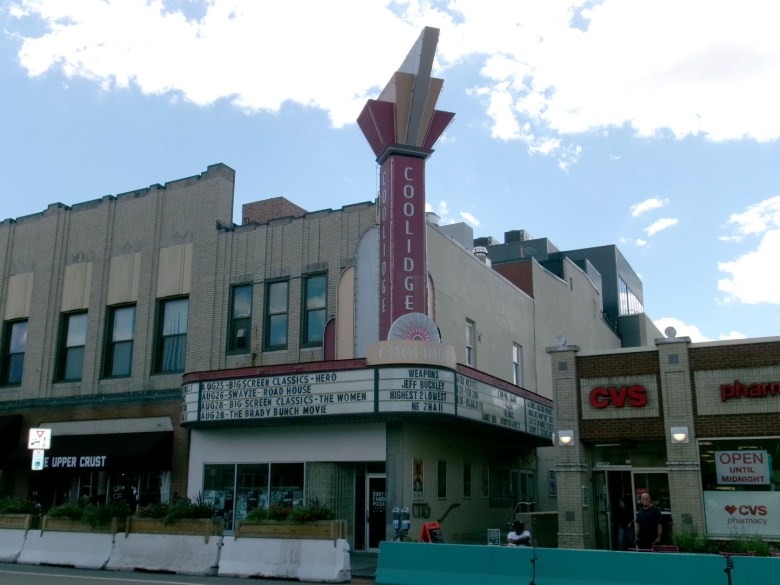
Three films delving into the intersection of institutional racism and national parks ignited conversation about suppressed and misinterpreted history Tuesday in the heart of Brookline.
The Friends of Fairsted, the nonprofit partner of Frederick Law Olmsted National Historic Site, and the Library of American Landscape History co-sponsored the film screenings and panel discussion at Coolidge Corner Theater. The three films, all produced by the library, centered on Olmsted and the history that is both remembered and forgotten in the landscape architect’s wake. Amid the ongoing government shutdown, the operation of national parks has been disrupted, making this screening even more pressing to those involved.
“Parks are the ultimate historical document,” said Ethan Carr, co-author of “Olmsted and Yosemite: Civil War, Abolition, and the National Park Idea,” which was adapted into one of the films. The panel consisted of Carr, William E. O’Brien and Rolf Diamant, three park historians and authors of the books on which the documentaries were based.
Each film touches on the implications of the displacement of indigenous communities in order to create national parks.
The first film, “Landscapes of Exclusion: State Parks and Jim Crow in the American South,” discussed the effect of segregation on parks in the United States, focusing on parks of the South that resisted desegregation and, in some cases, closed entirely to do so.
In the second film, “Boston’s Franklin Park: Olmsted, Recreation, and the Modern City,” the theme of racism and national parks was highlighted through discussion of mass movement of white families to the suburbs in the mid-20th century, leaving mostly people of color in the neighborhoods surrounding Franklin Park. After that demographic shift, the maintenance of Franklin Park by state and local authorities declined.
The free event drew attentive audience members who engaged with one another during the Q&A portion of the panel. One person congratulated the panelists on their work, while another called on them to change their rhetoric, arguing that the history of racism in parks was being intentionally misrepresented.
“One of the things that came out of the questions from the audience tonight was, ‘How do we act?’” said Tom Woodward, president of the Friends of Fairsted. He expressed growing concern with the disruption of the National Park Service, which runs the Olmsted National Historic Site, during the government shutdown, now the longest in history. A NPS representative could not make it to the screening because of the shutdown.
In the audience were members of the Franklin Park Defenders, a group of citizens concerned about the redevelopment of White Stadium, who handed out fliers after the screening of “Boston’s Franklin Park.”
“Our parks are being threatened more than ever,” said Caliga, a Franklin Park Defender who has lived in Boston her whole life. “Events like this are really important because history is being erased, especially for people who are not white.”
The Olmsted National Historic Site, known as Fairsted, contains more than 1 million objects in its archives.
“One of the most important things I think about when I think about the Olmsted National Historic Site is that it is in Brookline,” Woodward said. “In a lot of ways, it was made a national park because of its archives.”
While the site is operated by NPS, Friends of Fairsted is responsible for interpreting and empowering the history of the property, once the personal property of Olmsted himself.
Woodward encouraged people who care about national parks to visit and advocate on behalf of all parks, local and national alike.
“From Brookline, Massachusetts, we have this wonderful resource that really is of service to parks and landscapes across this great country,” Woodward said. “I think that’s one of my favorite things about Fairsted.”
This story is part of a partnership between Brookline.News and the Boston University Department of Journalism.
This article was originally published on November 9.