

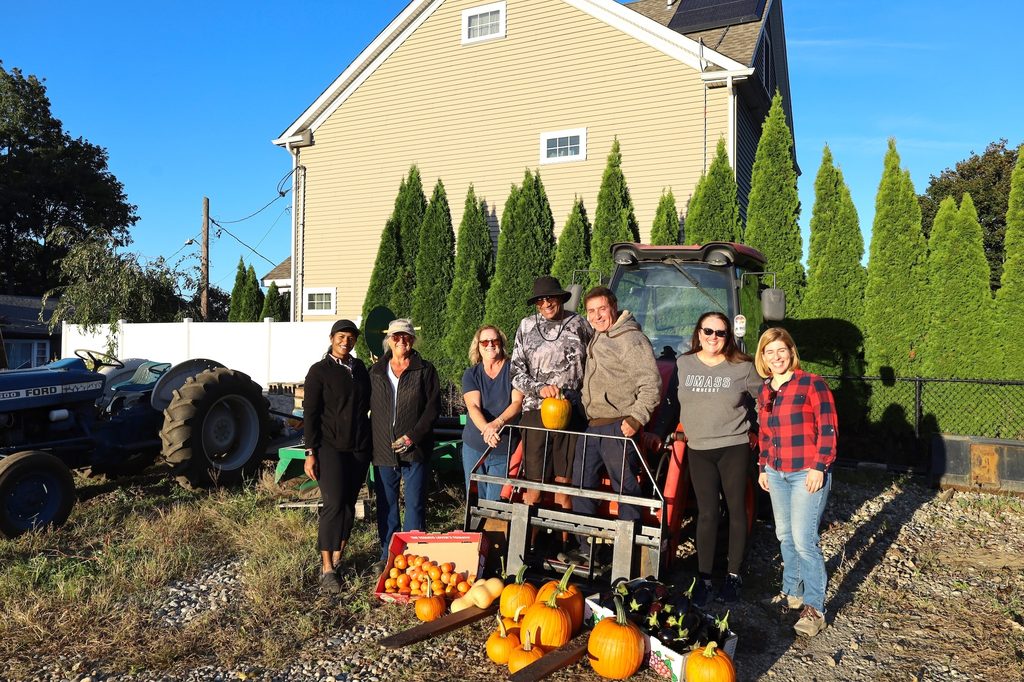
Group photo left to right: Subha Chardra, Cherly Marcou, Tony Moor, Charlie Mantenuto, Grace Sampson and, Andrea Santalarsci. Photo by Samantha Mandala.
Hidden behind a row of homes on Mt. Walley Road sits a nonprofit farm that grows thousands of pounds of produce a year, only to give it all away to the local community.
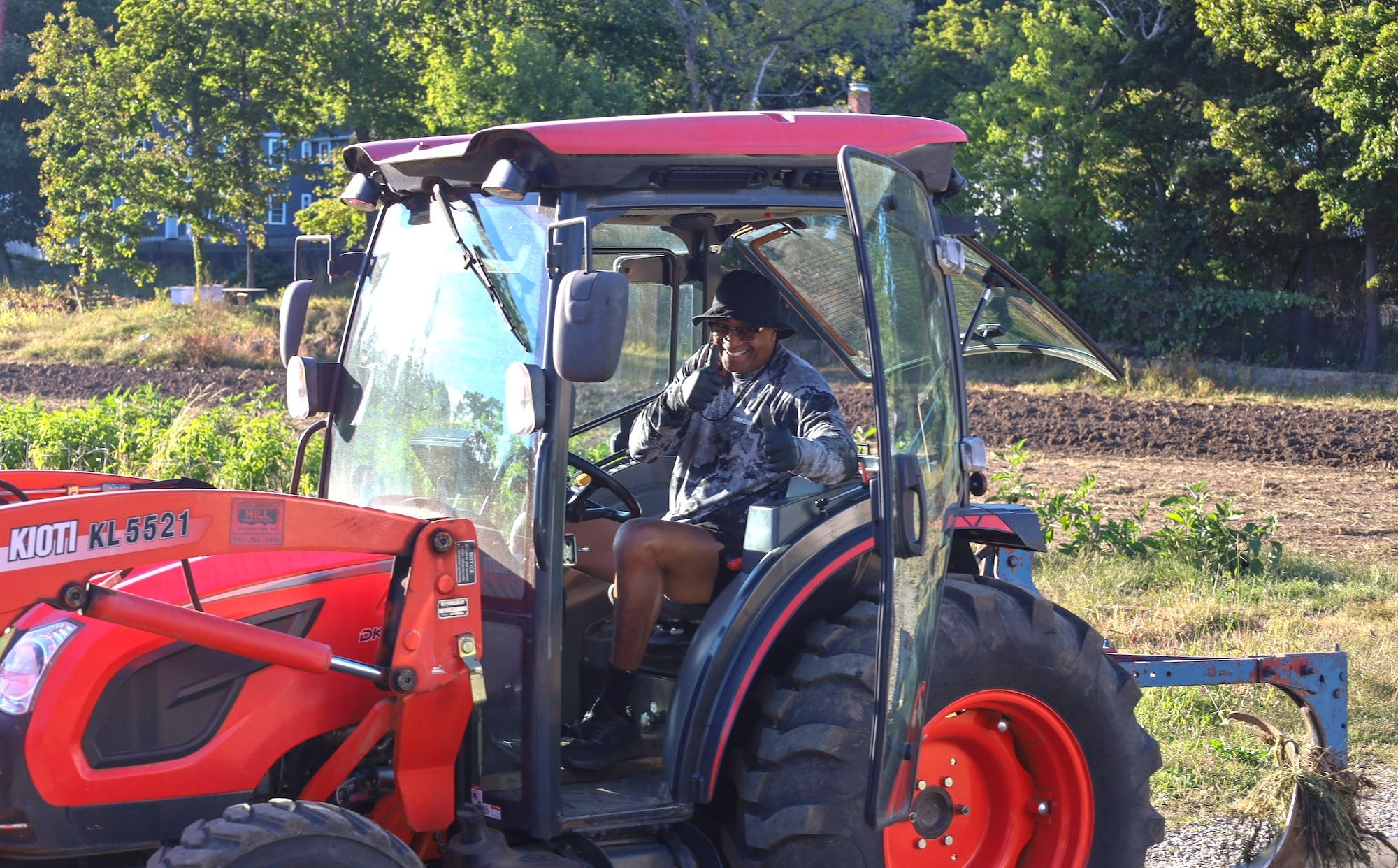
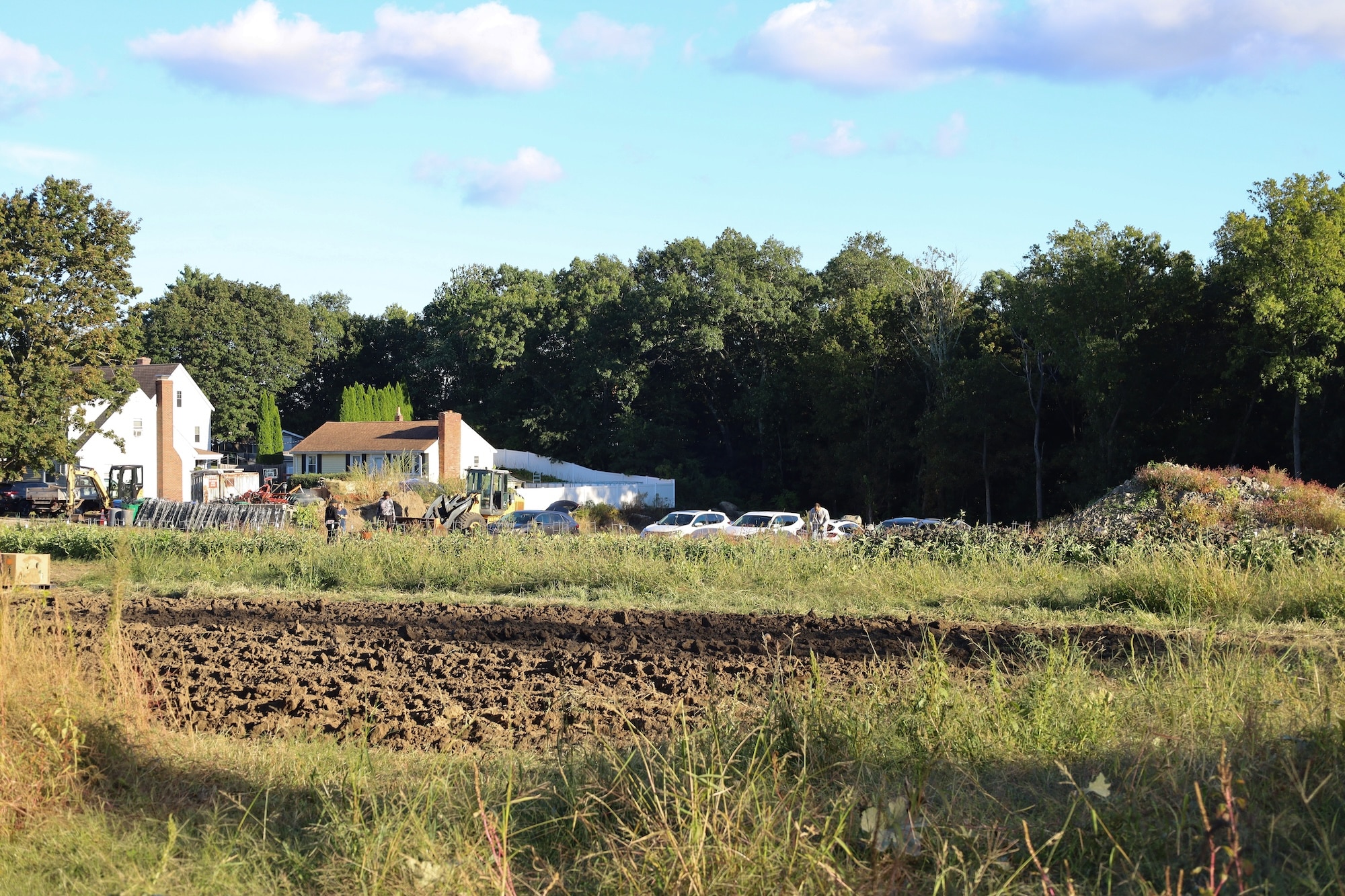
Run by longtime Waltham resident Charles Mantenuto, the farm has been operating since he first acquired the land in 2020. The land was originally 11 house plots filled with scrap metal, overgrown vines and a dilapidated barn. Over the course of seven months, Mantenuto, a former mechanic, cleared the junk, leveled the soil and created upper and lower plots ready for farming.
“It was really rewarding for me to turn [the land] back into a farm,” said Mantenuto, who grew up in Waltham and worked on his grandparents’ 65-acre farm.
What began as a massive cleanup project has grown into a community effort centered on food access and service.
“I felt that giving back to the community would be the right thing,” said Mantenuto, who wanted to farm purely because he loves it.
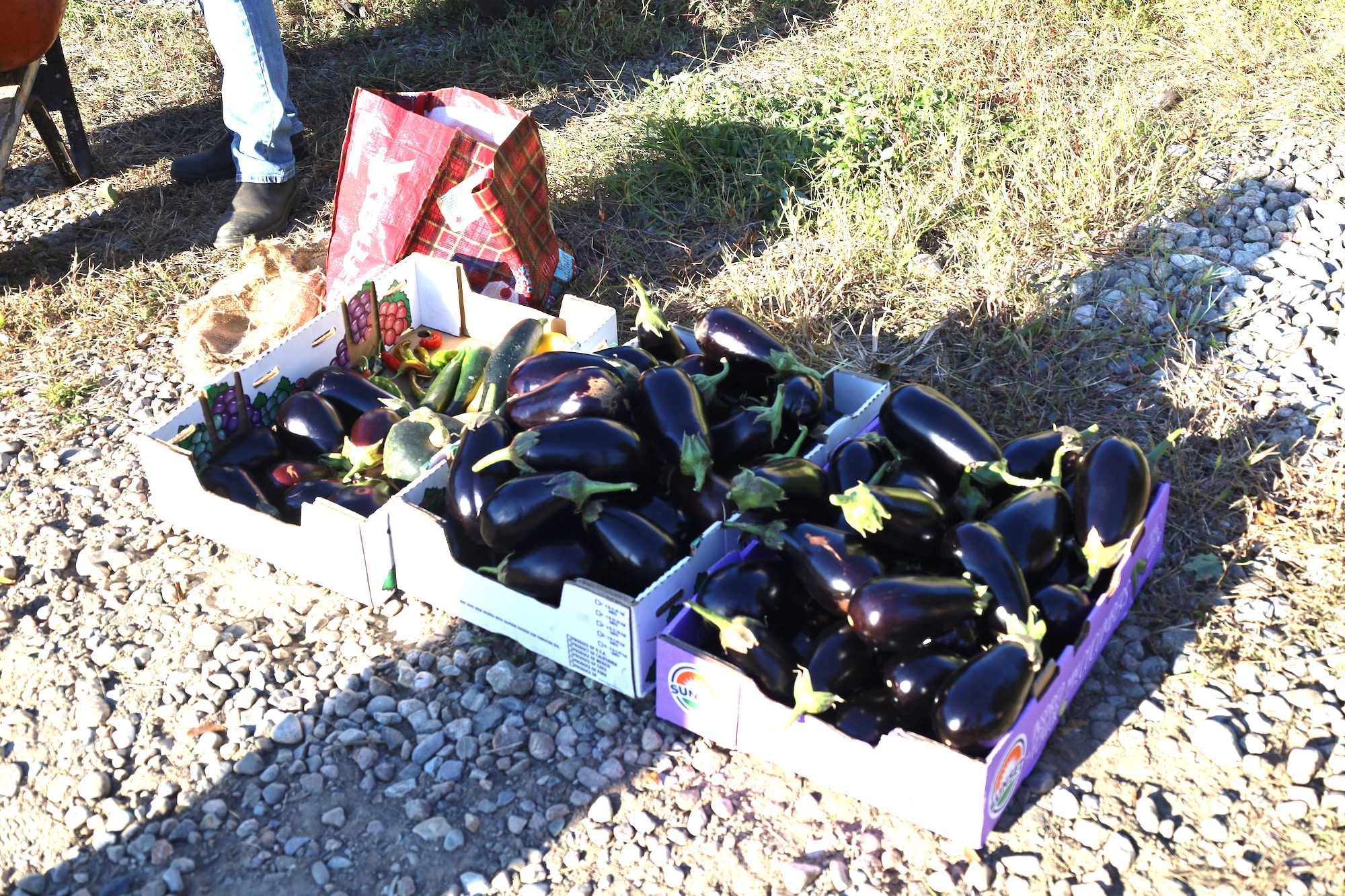
This year’s lineup of crops include zucchini, eggplant, peppers, tomatoes, corn, squash and pumpkins.
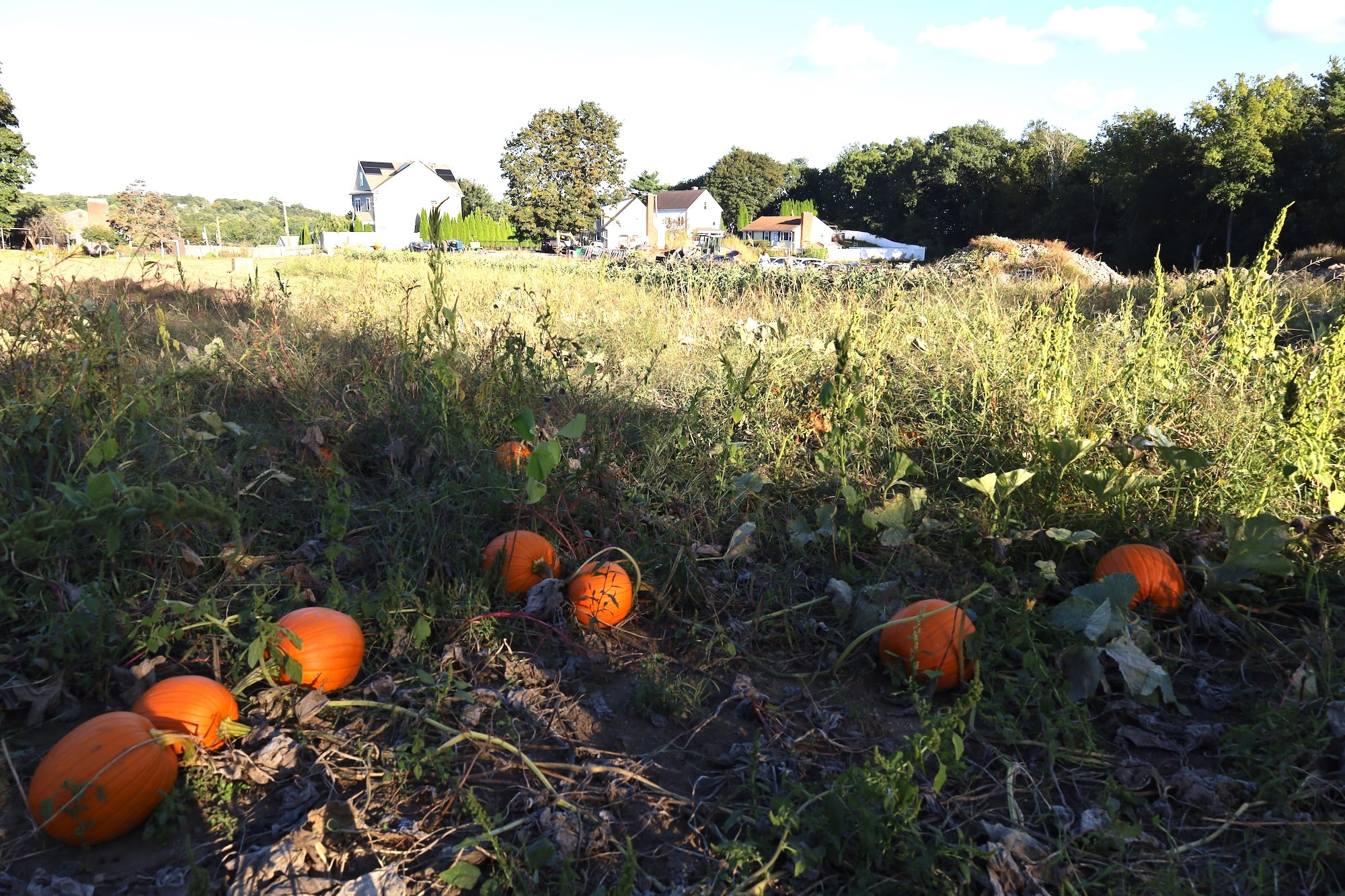
So far this year, Mantenuto and the volunteers have harvested 300 pumpkins from the lower field and plan on collecting roughly 600 more. All 900 will be distributed to three local elementary schools. On Thursday, Oct. 15, the farm will hold a pumpkin drivethrough at Pizzi Farm, 495 Lincoln St., where anyone can drive by and get two free pumpkins.

Community roots
MacArthur Elementary School is one of the schools that receives pumpkins from the Mantenuto farm. Parent Teacher Organization president Joe LaFauci said they have worked with Mantenuto for the last two years to bring more than a hundred pumpkins to the school’s annual Trunk or Treat. This year’s event, on Oct. 23, will once again feature Mantenuto pumpkins.
LaFauci said his father occasionally helps out on Mantenuto’s farm picking vegetables.
“I just appreciate Charlie’s generosity,” LaFauci said. “Seeing what he’s able to do with that land and giving back to the city is something I wish more people did.”
The rest of the farm’s produce is donated to the Middlesex Human Service Agency, a local shelter and food pantry. There are eight boxes of vegetables at Middlesex, with more on the way.
Andrea Santarlasci, a farm volunteer, said the mission at the farm is to provide hunger relief and support the community.
“People are getting pinched harder and harder,” said Santarlasci. “It really is important for community to help community here, and that’s really the heart of what we’re doing.”
A new gathering space
The farm gives to more than just the community, however. Volunteers also benefit from the welcoming community space the farm offers, including a chance to meet new people, get physical exercise and reconnect with the land.
Tony Moor, a volunteer from the farm’s early days, attests to those benefits.
“I love the idea of just giving back – the work, getting in touch with the soil.” Moor said. “It’s the best feeling.”
Moor singlehandedly recruited most of the dozen volunteers working for the farm, either from the YMCA or around his neighborhood. He and Mantenuto have become very close friends after six years of working together.
Cheryl Marcou, a Waltham resident of 32 years, said she never heard of the farm before Moor recruited her. She has volunteered for the farm for the last five years, and said she has found the farming process very rewarding. She often uses the produce, which the volunteers get a small portion of, to cook meals for the Community Day Center, a nonprofit day shelter for people experiencing homelessness.
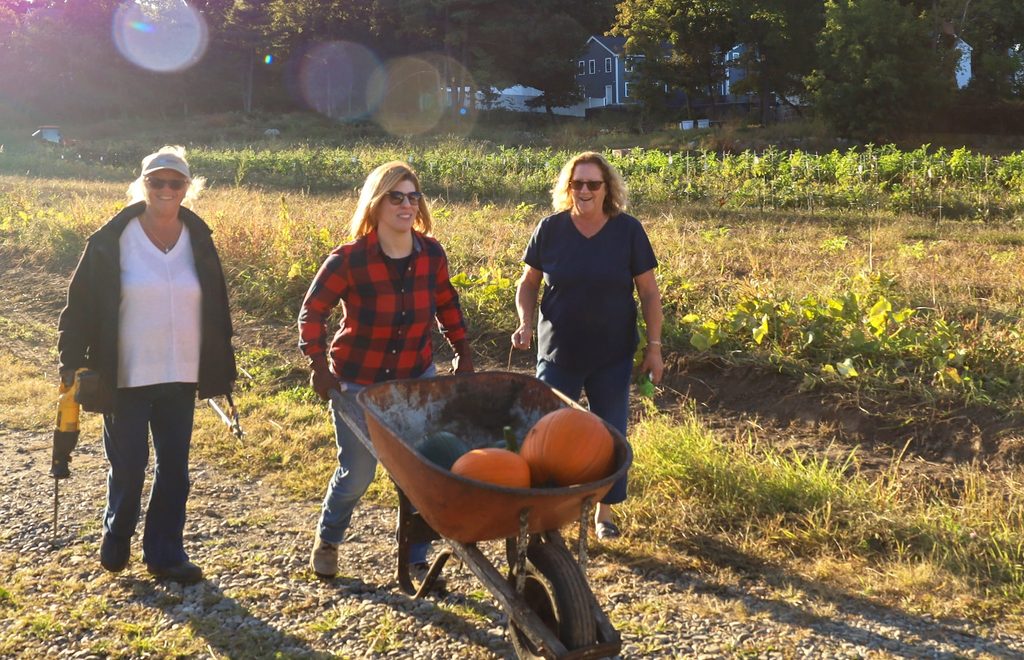
Andrea Santlarsci and Pattie Caisey, volunteers, bringing pumpkins back from the fields. Photo by Samantha Mandala.
A glimpse into the past
The story of the Waltham farm, however, dates back to long before Mantenuto’s time.
The property dates as far back as 1738, when what was then known as Harvard College purchased 160 acres of farmland in Waltham. Today, Mantenuto’s five acres are the only remaining portion of that land still being used for agriculture.
The property also contains remnants of Waltham’s colonial past. Paths once used by stagecoaches to traverse Boston’s Old Post Road now cut through the surrounding woods and are marked by stone walls that lined the routes.
Mantenuto said that history gives the property a significance that goes beyond its use as farmland.
“To me, it’s sacred ground,” he said. “It should never be built on.”
That philosophy has put the farm at the center of debates over the future of the property.
Mayor Jeannette A. McCarthy urged Mantenuto to sell the land to the city to prevent subdivision and development on the property, according to a document Mantenuto provided to the Waltham Times. It was written by Sherry Arrigo, the previous owner of the farmland. Mantenuto said he thought the farm would become conservation land like the surrounding forest area.
Shortly after the land was sold, however, the city planned to clear part of the land as part of a project to expand the Waltham High School campus, a short walk away from the farm, and create a new athletic field there.
The planned expansion was halted after the city discovered the land was too rocky for a proper playing field, and piles of unusable rocks and dirt were left, littering a quarter of Mantenuto’s property, litter that remains today. He hopes to eventually clear it out and create another plot for more vegetables.
At the end of the day, it’s about the community. “I’ve had people come here that used to work there when they were kids. They come here and spend the day, and it all brings back memories,” Mantenuto said. “There’s a lot of nice things going on.”
This story is part of a partnership between The Waltham Times and the Boston University Department of Journalism’s Newsroom program.