Category: Waltham Times

  • Epiphany students help artist ProBlak ‘breathe life’ into new mural

    By Nathan Metcalf

    Laughter, hip-hop, and the smells of soul food filled the air behind Epiphany School on Sunday as more than 200 people gathered to celebrate the unveiling of a mural celebrating Black joy and youth.

    The mural, “Breathe Life: 8piphany” by Boston artist Rob “ProBlak” Gibbs, stretches across the school’s rear façade. It shows two smiling children gazing upward as pages inscribed with the school’s eight character benchmarks — respect, courage, compassion, pride, perseverance, curiosity, gratitude, and thoughtful choices — swirl amidst a cosmic backdrop, evoking the boundless potential of Black youth.

    The eighth installment in Gibbs’s acclaimed “Breathe Life” series, the mural was created collaboratively with Epiphany’s students and staff. The project was supported by the city of Boston’s Un-Monument | Re-Monument | De-Monument initiative, funded by a $3 million Andrew W. Mellon Foundation grant for community-driven public art.

    The title “Breathe Life” comes from the idea of speaking positivity into the world, Gibbs said, “to take something negative and flip it into something positive, to breathe life into it, to resuscitate it.” The phrase, which he began using years ago in his graffiti work, became the title of a mural series celebrating Black joy and imagination across Boston neighborhoods.

    “I coined it to be like a love song to the city,” he said.

    Each mural, he added, “starts out with a thought. That thought turns into a conversation. That conversation turns into a composition. That composition goes into a community that hopefully influences or impacts the world.”

    Located next to Shawmut MBTA station, Epiphany School is an independent, tuition-free middle school for children from economically disadvantaged families in Boston.

    For A.B. Deleveaux, Epiphany’s director of arts and culture, the mural fulfills a dream years in the making.

    “Rob and I had been talking about doing something for the school for the longest time,” he said. “Now, every morning I come out here for inspiration before I start the school day.”

    The idea gained traction after Epiphany’s head of school saw “Breathe Life Together” on the Rose Kennedy Greenway. A student mural committee was formed to help brainstorm, and Gibbs painted during school hours so children could watch the piece take shape.

    Seventh-grader Zoe Peña, a member of the mural committee, said she initially was not confident in her art but joined after encouragement from Deleveaux. “I’m not usually into art,” she said, “but after the first session I got really interested.”

    Every one of the mural’s eight character benchmarks appears in her handwriting, a detail she said makes her “feel proud every time I look at it.”

    Jayden Rosa, another seventh-grader on the mural committee, said the project showed him “kids our age can work on big things.” He suggested including another of the school’s mottos, “Never give up on a child,” which now appears on one of the swirling sheets of paper. “It’s a great piece of art,” he said, “because the people who were involved can come back and admire that they were a part of it.”

    Tamare Gordon, an early educator at Epiphany and longtime Roxbury resident, said the piece captures what teachers strive to impart every day. “Looking at the faces and the quotes, it shows the confidence we build in children,” she said. “It’s a reminder they can reach for the stars.”

    Jason Talbot, Gibbs’s longtime friend and cofounder of Artists for Humanity, a South Boston nonprofit that employs teens in paid art and design work, said the mural continues the mission that he and Gibbs began as teens in Roxbury.

    “Rob’s voice is getting louder and louder,” Talbot said. “His message helps young people realize they’re worth investing in, that they’ve got a bright future.”

    During a panel discussion, Boston Globe columnist Jeneé Osterheldt told the crowd that art like “Breathe Life” plays a vital civic role, especially amid what she described as efforts by the Trump administration to restrict how race and history are taught in schools and museums.

    “Our history and imagination are under attack,” she said. “Art like this reminds us who we are.”

    Gibbs’s work now spans from neighborhood walls to major Boston institutions like Harvard University and the Museum of Fine Arts, yet he still looks to the city’s neighborhoods as his greatest source of inspiration.

    “People always ask why I keep coming back,” he said. “I never left. Greatness is already here.”

    This story is part of a partnership between the Dorchester Reporter and the Boston University Department of Journalism.

    This article was originally published on October 22, 2025.

  • Close to a quarter of Cambridge lab space sits vacant. What happens to it now?

    Close to a quarter of Cambridge lab space sits vacant. What happens to it now?

    By Martina Nacach Cowan Ros

    Four years ago, it was nearly impossible to find lab space for rent in Cambridge. Now nearly a quarter of it stands vacant.

    Only 0.3% of Cambridge lab space was vacant in the third quarter of 2021, when rents averaged $113 per square foot, according to the real estate firm CRBE. Now the vacancy rate is 22% and rents have fallen to $93 per square foot. All told, 4 million square feet of state-of-the-art equipment and bench labs meant for life-saving discoveries instead sit empty.

    These figures reflect broader trends in research and development within the biotech industry, caused by shifting expectations, a pandemic-led boom that has contracted, and uncertainty driven by the political and economic climates.

    From 0% to 22% in four years

    Part of the shift is due to the success of COVID-19 vaccine development in 2020-21, which prompted huge investments in the biotech industry, said Ben Bradford, head of external affairs at the Massachusetts Biotechnology Council (MassBio). Those investments sparked a development boom that brought large amounts of space online at the same time businesses backed by boom-time investments are failing, creating vacancies where there were none. Meanwhile, fewer new companies are able to access funding and those that do have capital are extra cautious with their spending.

    “Early-stage companies are what makes Massachusetts and Cambridge really special, and if they’re not getting funding, they’re not going to continue growing,” Bradford said.

    A market reset after a period of growth is expected, Bradford said, but any potential recovery is being disturbed by overarching uncertainty, leading to less funding in the industry along with unprecedented vacancy rates. Cuts to the National Institutes of Health (NIH), Small Business Innovation Research (SBIR) programs potentially not being reauthorized, Food and Drug Administration regulatory uncertainty, and unknown effects of tariffs on the pharmaceutical industry all add to this context.

    These challenges have led to a decrease in seed funding, enhanced by an increased preference for late-stage venture capital funding, which means investors wait longer to invest in companies that are more established. This affects early-stage companies that lack the revenue commercial companies bring in from sales.

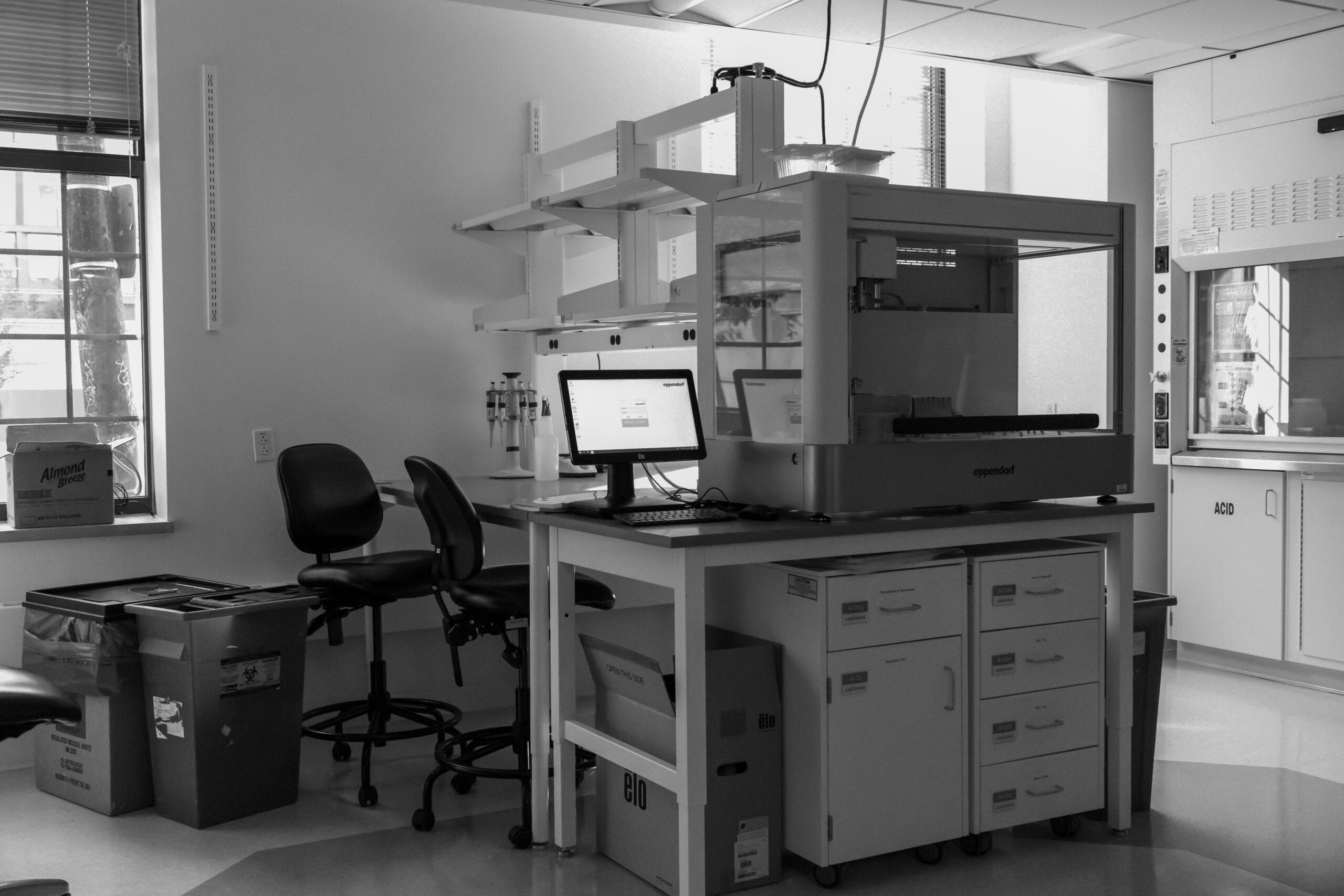
    LabCentral has used creative ways to find new tenants for its building at 700 Main Street in Cambridge, including an AI accelerator. By Ashley Hernandez Ramirez.

    Matt DeNoble, senior director of investment management for life science at real estate company Greystar, said the limited number of available lab spaces in 2020-21 raised rents and made returns more attractive for real estate developers, who pivoted from office spaces to life science developments.

    “That created an environment where it was right to develop and deliver…but as we’ve seen, a good portion of it was also developed speculatively,” he said.

    The combination of newly delivered space and opened-up spaces from shut-down or reduced companies has caused an environment prone to the large lab vacancy rates in one of the biggest biotech hubs in the world.

    What does this mean for real estate and development?

    David Townsend, executive managing director at commercial real estate adviser Newmark, said that while some landlords are waiting out the slowdown until demand shoots back up, other impatient partners are adjusting property values and lowering rents to attract tenants and fill up the empty space, Townsend said.

    “You will see some of these buildings trade and sell at a discount to their former value,” he said. “That allows [owners] to lease it out at lower rents, which I think, will be good for the ecosystem.”

    Maggie O’Toole, chief executive officer at nonprofit life science incubator LabCentral, said that because money is not flowing as quickly to early-stage companies, they are more inclined to stay in spaces like LabCentral, where they have access to equipment and space without being tied to a lease.

    “They’re going to be much more inclined to stay in a space like ours as long as they can, until they’re certain that they’ve raised the level of money that enables them to move into one of the larger spaces,” she said.

    LabCentral has used creative ways to find new tenants for its building at 700 Main Street in Cambridge, including an AI accelerator. By Ashley Hernandez Ramirez

    O’Toole said this is an opportunity to think about how to use space differently, something LabCentral did by introducing its AI BioHub to house an AI Bio Accelerator Program dedicated to AI-focused life science startups.

    “We would never have had the ability to do that before,” she said, “because our spaces were full all of the time. Because we have some empty space … we saw this opportunity to go after a grant that enabled us to take one of our labs and dedicate it fully towards exploring the intersection of AI and biotech.”

    Mark Fallon, director of research and strategy at Hunneman, said during the boom a lot of second-generation – previously used and converted spaces – entered the market and were occupied, thanks to high demand. Now, companies can choose between newly built, purpose-designed laboratories or older, repurposed spaces that aren’t ideal and thus are less likely to be filled. As a result, office-to-lab conversion projects have slowed significantly.

    Rents have dropped as a direct result of this excess of supply, Fallon said. Yet he said he does not believe this will be terminal for either of the industries.

    “Biotech is a cyclical industry, real estate’s a cyclical industry … I don’t think anyone’s ringing the death bell for biotech or life science,” he said. “None of these diseases are going away. People are still just [as] concerned about Cancer, Parkinson’s. The market isn’t gone, it’s just a timing issue.”

    Cambridge to the rescue?

    Melissa Peters, Cambridge’s assistant city manager for community development, said she recognized the life science sector was in a “chilling off period” but said the city remains a strong hub for life sciences and biotech. Although there is uncertainty, Peters said, the slowdown is part of the economic cycle, and said she is confident the economy would readjust. “[We] just need to be a little bit more proactive and innovative in coming up with how to ride that uncertainty,” she said.

    The state has helped ease the drop in federal funding and provided incentives for development, Peters said. She also said the city is happy to work with tenants looking to fill vacancies and mentioned the Economic Opportunity and Development Division, which looks to act as a liaison to help Cambridge businesses and industries.

    Peters said the goal is to have a healthy biotech industry in Cambridge with a diverse economic ecosystem that avoids oversaturation. That means providing space for ventures of all sizes, from startups to large companies and tough tech to biopharma.

    “Cambridge is the most innovative square mile on the planet,” she said. “While it’s certainly concerning for us …we really do see Cambridge as kind of home base for companies to be at.”

    This story is part of a partnership between Cambridge Day and the Boston University Department of Journalism.

    This article was originally published on October 22, 2025.

  • ‘Echoes of Home’ inspired Brandeis junior’s Waltham Family School mural

    Brandeis University junior Alanis Gonzalez comes from a family of creatives.

    Not only is Gonzalez’s mother an artist, but her grandmother is as well. In Gonzalez’s youth, her grandmother collected discarded items from the streets of the Dominican Republic — think coins, keyboard keys and paper clips — to create a collage of trash on canvas. Gonzalez considers this piece of art to be something from nothing. It’s her favorite. 

    So when Gonzalez got the chance to coordinate the painting of a mural for the Waltham Family School, she knew what her vision would be.

    “I really wanted to hone into something that was a personal experience for some of my family members,” Gonzalez said. “But I also wanted to amplify the voices of others in the Waltham community.”

    The Waltham Family School, a local English language program for immigrant families, unveiled the “Echoes of home/Ecos del hogar” mural to a crowd of about 50 supporters, including Mayor Jeannette A. McCarthy, on Friday. 

    The school’s program director, Jackie Herrera, said the curriculum serves children and their parents who want to improve their English and workplace skills. The school offers field trips, Chromebooks and scholarships for students who need extra help.

    The mural depicts three women at different stages of motherhood, surrounded by butterflies and flowers that represent the students’ native countries.

    “Everybody felt very engaged and connected to the process,” Herrera said. “And I think that that’s what created such a beautiful mural.” 

    Gonzalez, who is from Newark, N.J., said she knew she wanted to leave her mark on Waltham as early as her freshman year at Brandeis. By chance, Herrera visited one of Gonzalez’s classes to discuss The Waltham Family School and its mission. She was hooked.

    “I was like, I’m gonna work with [Herrera]. I literally told her that after she left the classroom,” Gonzalez said. “Like, ‘Don’t forget about me.’” 

    From shared stories to the final design

    When Gonzalez received funding from Brandeis’ Rich/Collins Fellowship, she reached out to Herrera, who mentioned the school had bare walls. Gonzalez knew that had to change.

    “We didn’t just want to draw art,” Gonzalez said. “We wanted to draw something that represented (students) and their experiences.”

    With the help of volunteers from Brandeis, students and a local professional muralist, Tova Speter, the four-month process of painting the wall began.

    “The mural process started with a community input event,” Speter said. “We engaged in a series of activities that included verbal brainstorming, written brainstorming and visual brainstorming.” The second step involved melding the community’s various ideas into a cohesive design. Then the tracing and painting began, mostly by volunteers from Brandeis. 

    “Having this mural at the Waltham Family School is just a lasting visual representation of what the program means to the students and to the community,” Speter said.

    Herrera said the opportunities offered at Waltham Family School are for everyone, regardless of their background.

    “My mom was a teen mother, and my grandmother raised me,” Herrera said. “I have no doubt that if my mom had had a program like this, her life would have been very different.”

  • Here is what the most cited engineer in history has to say about biotech and research right now

    Here is what the most cited engineer in history has to say about biotech and research right now

    By Martina Nacach Cowan Ros

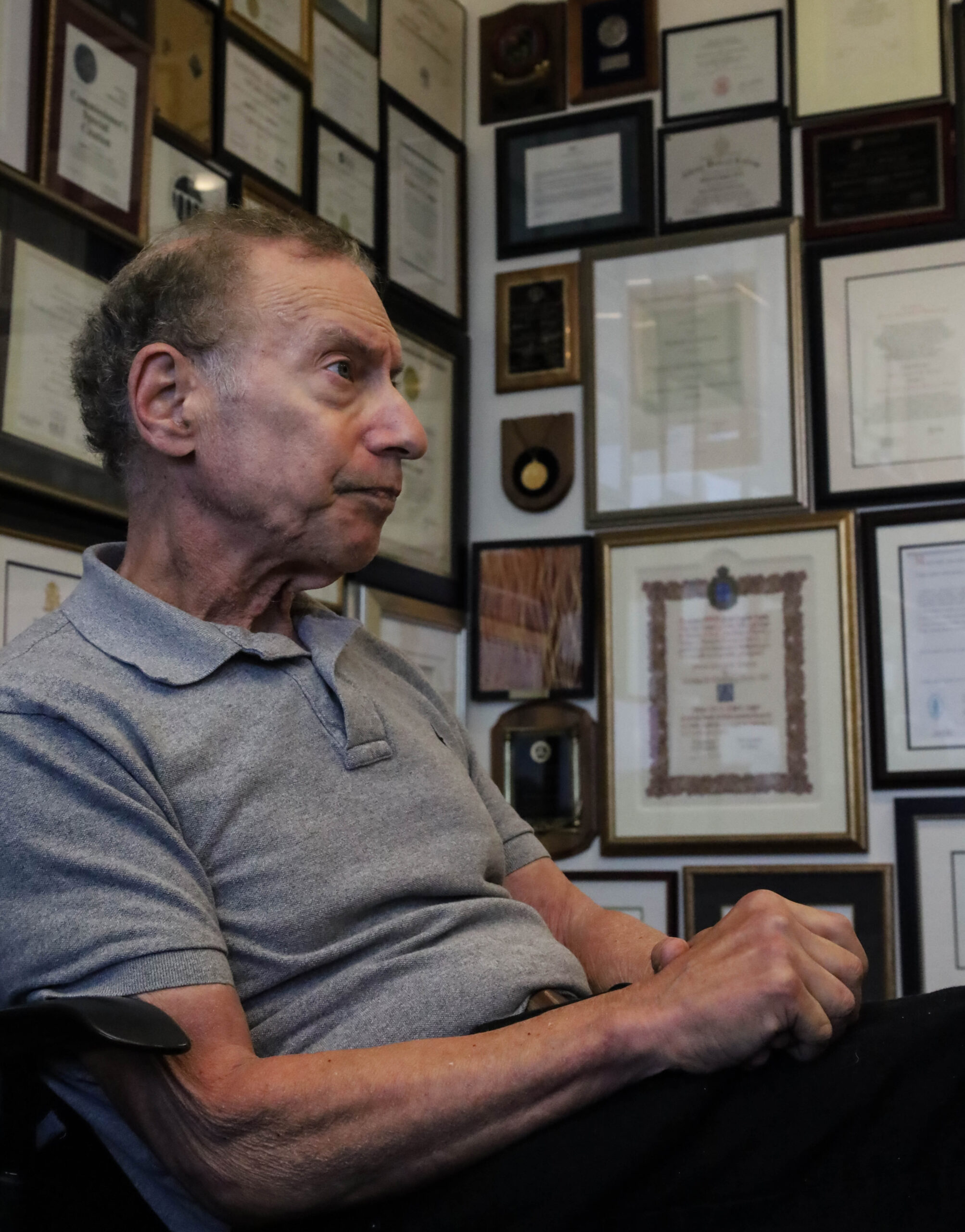
    Robert Langer, the world’s most cited engineer, has seen ups and downs in the biotech industry over the past 40 years, so he isn’t overly worried about the current slowdown. What concerns him is the spread of scientific misinformation.

    Langer has won more than 220 major awards, written more than 1,600 articles, owns 1,500 patents and has been involved in dozens of startups, including co-founding Moderna, maker of a widely distributed Covid vaccine. His h-index of 319 – a measure of both the productivity and influence of scholars’ published work by looking at how often others rely on it – is the highest ever recorded for an engineer and the third highest across all academic disciplines, according to the International Society for Pharmaceutical Engineering.

    His Langer Lab at the Massachusetts Institute of Technology employs around 100 people researching ways to deliver medicine in the body and advance tissue engineering.

    The lab remains in full operation on 19 active projects, despite the biotech industry seeing a drop in funding, layoffs in manufacturing, a rise in lab vacancies and just a modest uptick in the overall drug pipeline, according to the MassBio 2025 Industry Snapshot. Langer sat down with Cambridge Day last week to discuss the state of biotech and research in the region.

    Langer has seen slowdowns before – in 1992-1994 and 2008-2009 – but this downturn has lasted longer, with biotech companies struggling to raise money amid falling stock prices for “maybe the last three or four years,” he said.

    He says a long period of accelerated growth caused unrealistic expectations among investors in multiple sectors of the economy. “When there’s an up, there’s an overexuberance of money pumped into something, and then some things probably shouldn’t have had as much money pumped into them,” he said. “People get too exuberant, and that’s not limited to biotech.”

    He noted a hype cycle from 2003, when the Human Genome Project completed its mapping and sequencing work. “The potential of the Human Genome Project is and was enormous,” he said. “But people got the expectation that it was probably going to change the world very quickly in terms of products. And yet everything in medicine takes time.”

    Federal budget cut effects

    Massachusetts organizations received 9.9 percent of all National Institutes of Health research project grants in 2024, according to the MassBio 2025 Industry Snapshot, but if the pace of funding seen this year continues, Massachusetts organizations will see $464 million less in 2025 than in 2024 – a year that saw a 1.3 percent decrease from 2023.

    In the short run, federal budget cuts aren’t affecting the biotech business, Langer said, since companies tend to rely on funding from investors and the industry was already in a slowdown. The immediate impact is on academia: Harvard Medical School has seen 350 federal grants and contracts terminated by the government, representing about $230 million in funding annually, according to the medical school’s website.

    Langer’s lab at MIT has not been affected, but he has heard that a well-known professor from Harvard had to lay off two-thirds of their team, and he has talked to a Nobel Prize winner who lost a grant. “Those are not good signs,” Langer said.

    Research is like “shots on goal,” where sometimes a lot of effort can lead to nothing, he said. That makes it hard to choose what investigations to pursue, but “the more money you dump at things intelligently … you have greater chances of having certain things happen. If you have more good people coming at it more different ways, you have a great chance [for] success.”

    Langer pointed to the first Trump administration’s race to find a Covid vaccine. Instead of funding one program, the government funded several. The vaccinations developed in the United States and abroad prevented an estimated 14.4 million deaths in a year, according to the National Library of Medicine. “That choice of funding all those things by the government. It just saved a tremendous number of lives,” he said. “You have more of a chance when you bet on more horses, right?”

    Hopes and worries

    Langer said it’s too early to know the scope of these impacts. He is optimistic that opportunities and new medicines are still on the horizon. “This may be a bit of a downturn, [but] I have every expectation it will come back just like it has before,” he said.

    Things he’s watching are advancements in genetic medicines and cellular therapies that could be used to treat cancer and advance regenerative medicine. “Those areas, I’m very excited about,” he said. “I think they’ll make a big difference in the world.”

    What Langer is worried about is the stream of misinformation spreading daily, especially misinformation about vaccines.

    “Let’s say you’re not going to give people measles injections,” he said. “People will die. That worries me. I think that should worry everybody. Sadly, we may see more people die from certain diseases because of what’s going on in the short run. In the long run, I think throughout history, science has ultimately won.”

    This story is part of a partnership between Cambridge Day and the Boston University Department of Journalism.
    This article was originally published on October 2, 2025.

  • Massachusetts backs AI-powered biotech startups with BioHub program

    Massachusetts backs AI-powered biotech startups with BioHub program

    By Martina Nacach Cowan Ros


    Thirteen artificial-intelligence-focused life science startups graduated Tuesday from a 12-week Cambridge program that gave them access to lab space, business training and tech support.

    These companies are part of the first cohort to go through the AI Bio Accelerator Program, part of the new AI BioHub, a space in Kendall Square dedicated to the integration of biotech and AI resources. This program started when the Massachusetts Technology Collaborative, the state’s economic development agency for technology, awarded a Sector Spark grant of $1.9 million to the Cambridge nonprofit incubator LabCentral and AI venture studio C10 Labs.

    The aim of the program is to create a space to support early-stage startups at the crossroads of AI and biotechnology and help them grow. The companies involved focus on a range of areas, from developing gene-editing tools to AI-powered diagnostics for Lyme disease and breast cancer.

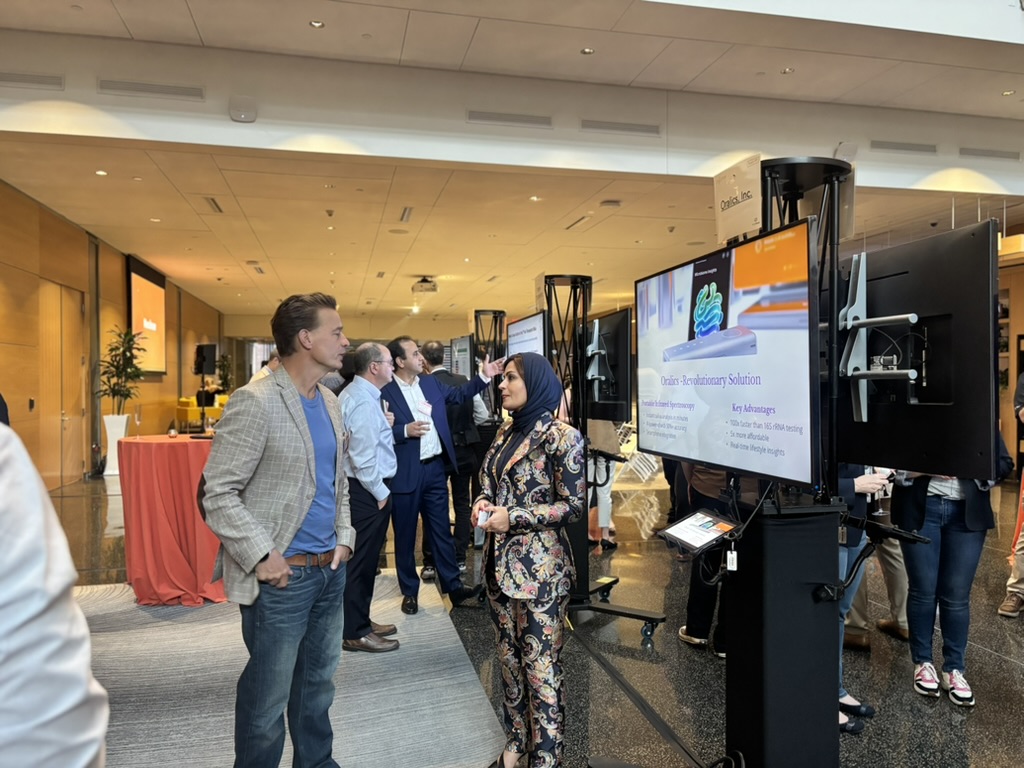
    The Brilliant Collisions showcase, which took place in the lobby of the Takeda offices in Cambridge, featured a panel of industry leaders who helped build the program, followed by one-minute pitches in which each startup presented its ideas and goals. Afterward, each team stood next to presentation slides to discuss their projects with attendees. 

    Kirk Taylor, chief executive of the Massachusetts Life Sciences Center, a state-funded group that supports the economic development of the sector, said Massachusetts stands out in a key area, one that provided the name of the showcase: “brilliant collisions.”

    “One plus one will equal three,” he said, “meaning that by colliding with people outside of your sector but who are interested in the same areas – AI, growth, health, health equity – we’re able to create new ideas, grow even faster and actually innovate.”

    Crucial after cuts

    AI is important for the growth of the biotech sector, especially after a recent slowdown in research and development, Taylor said. This makes it crucial for individuals across disciplines to partner and look for alternative ways to grow, he said. 

    “AI accelerates just about everything,” he said. “It brings products faster to market, clinical trials [are] faster, costs lower, targets are identified in a much faster way, a much cheaper way, and with that we’re able to innovate at a much faster speed, without increasing the dollars.”

    Massachusetts is the country’s top life sciences hub, Taylor said. To continue to grow, the sector needs to incorporate AI to create opportunities that will have a global impact, he said. 

    “The patients don’t just live in Massachusetts. They live in this country, they live in North America, they live in Europe, all around Africa, Asia, all around the world,” he said. “What we do here has global impact, because everyone deserves good health.”

    Startup for startups

    MassTech and the administration of governor Maura Healey announced LabCentral as a recipient of the grant in March. Four months later the program began in full operation within LabCentral’s wet lab spaces, while C10 Labs provided insight on how to bring AI-specialized support to the life science cohort, made up initially of 15 companies.

    Lyndsey Rissin, director of science strategy at LabCentral, said the grant helped with capital infrastructure and programming support, which allowed LabCentral to immediately start building the lab they named the AI BioHub. By May and June, they were already recruiting teams for the cohort.

    Beth Porter, head of studio operations at C10, said the cohort learned AI tools, methodologies and strategy throughout the program and were encouraged to find ways to implement these into their company business models. 

    Applications for the program’s second cohort are set to open early next year, offering another round of companies the chance to join.

    Guardrails for AI

    Chelsea Trengrove, chief executive and cofounder of AI gene-editing company Neoclease, which was one of the companies graduating from the cohort, said what once needed a full doctoral thesis can now be done in a minute with AI.

    “The program has been so fantastic,” she said. “AI in every industry is just going to be enabling and accelerating. So it’s really great to have folks like this connecting us to those tools.”

    She said it’s always good to be skeptical of what AI produces, and explained that there are guardrails and validation steps in place to ensure accuracy in all their work. The company is raising seed funding for a Parkinson’s editor.

    “You’re trying to create something that’s going to be life-changing for a patient,” she said. “What we’re really focused on is building cures. And so, for us, it’s a really great use case of AI.”

    This story is part of a partnership between Cambridge Day and the Boston University Department of Journalism.
    This article was originally published on October 2, 2025.

  • Winchester’s new open space plan calls for cleaning up Wedge Pond

    by Aayushi Datta

    October 16, 2025 . 6:00 AM  5 min read

    Winchester is working on a new open space plan that will improve parks, trails and areas around Wedge Pond.

    Winchester officials are turning their attention to one of the town’s most recognizable landmarks, Wedge Pond, as part of a new open space and recreation plan that outlines improvements to parks, trails and natural areas over the next six years.

    This is the town’s fourth such plan, which aims to protect the town’s open spaces while making them more accessible and environmentally healthy. The plan provides residents with a report on the town’s recreational facilities and natural environment.

    A group of Scouts on canoe on Wedge Pond. COURTESY PHOTO/MATT GORDON

    At a Sept. 8 public hearing on the plan, residents said they wanted it to focus on water quality for ponds across town. Wedge Pond, long known for algae blooms and high bacteria levels, is one of the plan’s main focus areas.

    Elaine Vreeland, Winchester’s conservation administrator, said the pond is a priority from both recreational and conservation aspects of the plan.

    The Conservation Commission will focus on water quality. For years, residents have raised concerns about the health of Wedge Pond. High bacteria counts and recurring algae blooms have kept the pond closed to swimming for long periods.

    “There’s a history with the pond of so-called Wedge Pond fever, which goes back probably 60 years,” said John Stevens, who has lived near the pond for more than 30 years. “It’s getting more use now, but it still needs some help to be brought to standards that most people would accept for swimming.”

    A frozen Wedge Pond attracts players for a hockey game. COURTESY PHOTO/MATT GORDON

    Testing and treatment of the pond are managed by Water & Wetland, an environmental firm contracted by the town. According to a 2024 report from Water & Wetland, the pond has historically struggled with microscopic algae blooms, which can reduce water clarity and affect aquatic life.

    “We conduct monthly site visits, which consist of on-site treatments as necessary,” said James Lacasse, a senior environmental scientist with the company.

    The 2024 report documented two invasive plant species, curly-leaf pondweed and purple loosestrife, while native plants, such as coontail and water lilies, continued to thrive, sometimes reaching nuisance levels. Dissolved oxygen readings, which indicate water health, generally showed healthy levels for fish and aquatic organisms, although algae blooms remained a recurring issue.

    Donate today!

    Lacasse said the town is considering adding an aeration system to pump oxygen into the water, which could reduce algae growth and improve water clarity. The proposed aeration system could cost $35,000 to $40,000 and would mix the water column to reduce harmful algae blooms.

    Vreeland said the Conservation Commission is working on getting the aeration equipment. The project is awaiting final approval.

    A look at the flora and fauna on Wedge Pond. COURTESY PHOTOS/RANDIE BLACK-SCHAFFER

    Nick Cacciolfi, Winchester’s recreation director, said his department is working to make the Borggaard Beach area around Wedge Pond more inviting. Borggaard Beach is currently closed because of high levels of bacteria in the water. Although intended to be a bathing beach, the town has set an alternative goal to make the beach more usable until the water quality issue is resolved.

    “Our goal is to make it accessible and available to people that want to enjoy it as a park,” Cacciolfi said.

    Two beach volleyball courts are set for construction this fall, and the town plans to add picnic tables, better walking paths, and a small area for kayak launches.

    “These are the steps that we’re taking to make it open and feasible for future expansion and to clean up the area,” Cacciolfi said.

    Volunteer groups have also become part of the effort to restore the pond. The Friends of Wedge Pond, a local community group, has organized cleanup days, removed invasive plants and raised awareness about the pond’s condition.

    The Friends have received Community Preservation Act funding for minor improvements in addition to the ones already being made by the recreation department. Under the CPA, towns can collect a small property-tax surcharge that the state matches by up to 40%. The money can be used for open space, recreation, affordable housing, and historic preservation.

    Plans are in the works to improve the area around Wedge Pond. COURTESY PHOTOS/MATT GORDON

    Approximately $60,000 in CPA funds have been allocated to support upcoming Wedge Pond projects. At a June 10 meeting, Bill Band reported that state Rep. Michael Day had secured a $150,000 earmark in the state budget for Wedge Pond water quality.

    “In the short term, the next year or so, you’re going to see a lot of action down there and bringing it up to speed, and making it more of a town resource than it’s been over the last four or five years,” Cacciolfi said.

    For Stevens, Winchester’s plan is a significant step toward fighting climate change.

    “These efforts, to me, are important,” Stevens said. “Winchester can’t alone accomplish or limit climate change. It can be an example, and it can also, with the cooperation of others, help to, presumably, minimize the change in climate.”

    Aayushi Datta is a journalism student at Boston University. This story is part of a partnership between the Winchester News and the Boston University Department of Journalism.

  • In new exhibit, local artist Michael Berger captures Brookline’s character

    By Hazel Nystrom

    Michael Berger remembers the moment well. It was 10 degrees in Coolidge Corner. A few stragglers stood shivering, waiting for the T. It hardly seemed like a good photo opportunity. 

    But as his eyelashes frosted over, the scene looked different to Berger. The light refracted, creating a blurry, impressionistic version of the moment. 

    Looking through his icy lashes, he snapped the photo as he envisioned the final piece. “That’s the image,” said Berger, an artist  and professor emeritus of chemistry at Simmons University. 

    Tucked into a small gallery in the Brookline Bank in Coolidge Corner, Berger’s latest work showcases sights dear to Brookline residents. Along the walls, the 13 pieces that make up “Visions of Brookline” capture glimpses of everyday scenes, somewhat obfuscated through fractals and haze.

    The exhibit is open through October as part of ArtsBrookline’s initiative to showcase local artists. ArtsBrookline is a nonprofit organization established in 2017, aiming to support artists and develop Brookline into a cultural district.

    As a Brookline resident of nearly 50 years, Berger, 81, takes inspiration from the places around him. Coolidge Corner, Village Square and Dane Park are among the familiar sights found in his work. Berger said his art serves not just to document a place but to capture a feeling.

    For Sasha Liang, 39, longtime Brookline resident and manager of Brookline Bank’s Coolidge Corner branch, Berger’s exhibit did just that. 

    Liang said the exhibit showed “how the various landscapes have changed in the 30, 40 years [he’s] been in the community.” 

    “It’s nice to see what [Brookline] used to look like,” Liang said. 

    Of the locations he photographs, Berger finds Brookline Village to be “the most evocative of another time,” Berger said. Many of his works open a window to Brookline’s past. 

    Berger uses photography and digital painting software in place of a traditional artist’s sketchbook, in an effort to evoke a “sense of place.” He then prints a giclée, a high-quality art print, on canvas and augments his piece with classical mediums — oils, watercolors, chalk pastels or acrylics. 

    The intersection of art, science and photography has always been at the epicenter of Berger’s work. During his 25-year career at Polaroid, he sought to capture both the sharp detail of traditional photography and the feeling of the moment. 

    To do so, he said, “you have to go off track. You kind of have to look at it squinting and look at it over your shoulder.” 

    Berger said he captured that feeling in his work, developing new types of film for Polaroid. This intersection of science and art has influenced his work since, including during his 19 years as a chemistry professor at Simmons. 

    “Science is very dynamic, and art is like that too,” Berger said. “I find that art and science kind of stimulate one another if they’re allowed to blend.” 

    Amy Browning Emmert, vice president of ArtsBrookline, wanted to feature the locally well-known artist. Throughout the installation of his exhibit, passersby stopped to observe the work and chat with Berger, she said. Everyone seemed to know him. 

    Browning Emmert said Berger’s work evokes the memories of the viewer, providing a sense of place and community. 

    “It’s sort of a way of distilling memories in a contemporary way,” she said. The images “make you think about your life, when you went through that place, or how you stood waiting for the T.”

    What many see as mundane, Berger can transform. Dynamism, connectivity, and movement drive his work, even in the most unsuspecting of places.

    “I love the T,” Berger said. “It connects. It flows, just like art and science. It has that dynamic.”

    As a founder of the Brookline GreenSpace Alliance, a nonprofit intended to support Brookline’s open spaces and greenery, Berger’s passion for environmentalism seeps into his art. He’s currently working on another series of images taken at the Arnold Arboretum. 

    Berger’s first exhibit was at the Arnold Arboretum in 1992. And he’s still going. When rain starts falling in sheets, or snow drifts slowly down, he’ll grab his camera and get to it. 

    “The rain, the darkness, the fog, cuts out a lot of the extra stuff,” he said. The image “becomes more like a poem, a visual poem, than a documentation.”

    This story is part of a partnership between Brookline.News and the Boston University Department of Journalism.

    This article was originally published on September 18, 2025.