

Needham Bank’s Natick branch will start providing dementia-friendly banking hours — a calm and supportive space for those experiencing cognitive decline — on the third weekend of every month starting Oct. 17.
The bank will dim the lights, play calm music, and only admit people living with dementia and their caregivers from 12:30 to 2:30 p.m. every third Saturday. The bank will also offer more thorough support in setting up and handling accounts.
The new program is part of the Dementia Friendly Natick initiative in partnership with the Council on Aging and Human Services.
Co-chairs of the Dementia Friendly Natick Action Team, Debra Budd and Paula Panchuck, launched the initiative last November, joining forces with town departments and community members.
Budd said the team aims to educate residents and town staff in communicating with people who have dementia and to host programming for those with dementia and their care partners.
“Oftentimes people who have dementia and their care partners are isolated at home,” Budd said. “We just wanted them to have a place to go that would be comfortable, and they would be with other people who are experiencing similar things in their life.”
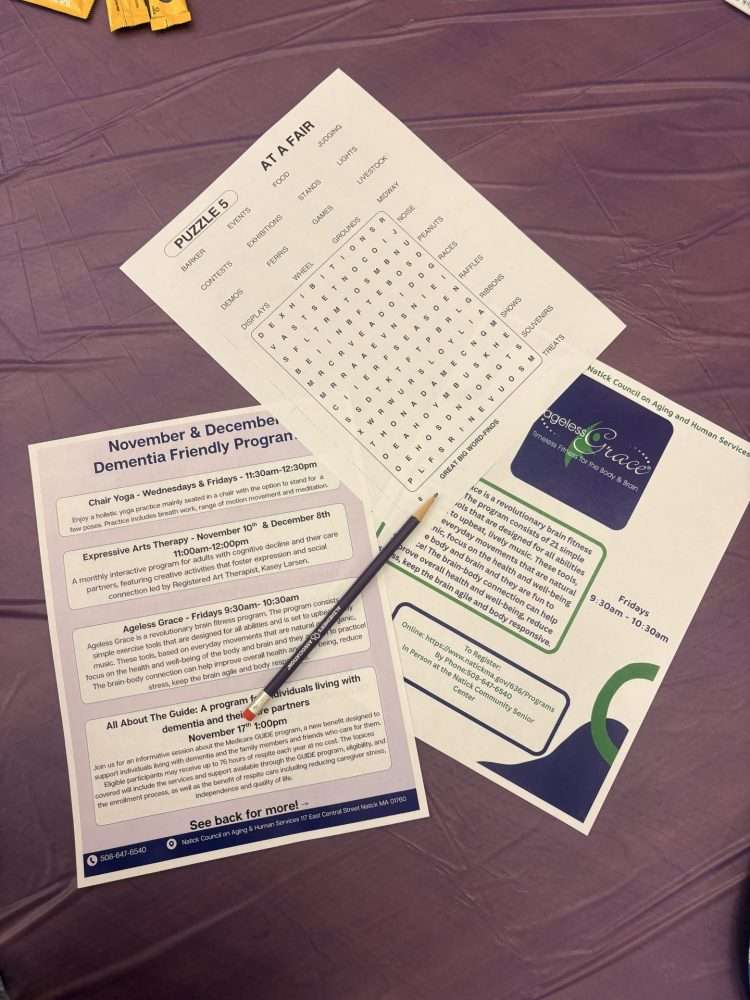
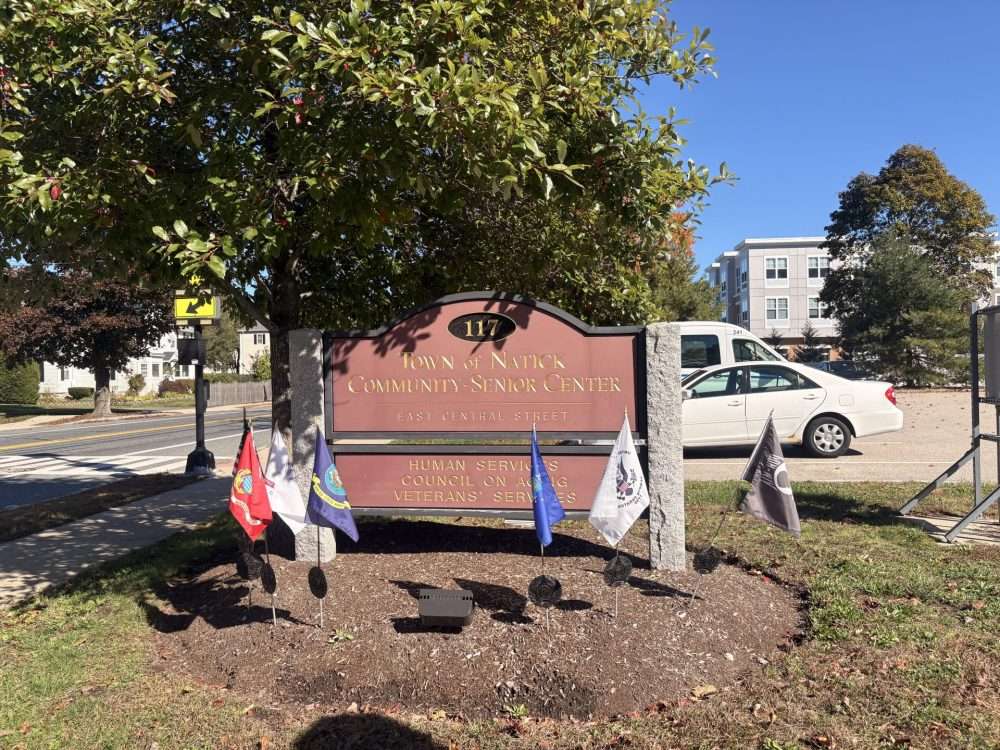
Dementia Friendly Natick also regularly hosts events at the Natick Community-Senior Center specifically for dementia patients, including a monthly Memory Cafe where guests gather for lunch and listen to live music.
At this month’s Memory Cafe event Oct. 15, music therapist Ken DoRosario played classic hits on an acoustic guitar while participants sang along to songs like “Don’t Worry Be Happy” and “Take Me Home, Country Roads.”
DoRosario handed out egg shakers to people sitting at tables and guided them to move to the beat. One song encouraged participants to sing “oh, oh, oh, oh, oh” and “sh, sh, sh, sh, sh” so those with dementia could practice articulating different sounds.
Katie Stanganelli, who organizes the Memory Cafes, said she invites performers who can welcome and stimulate participants.
“We try to have those interactive programs so everyone can participate with one another, engage with one another, and connect,” Stanganelli, outreach coordinator for the Council on Aging and Human Services, said.
Dennis Kamm, a caregiver, brings his patient Kevin Fitzgerald, 76, of Natick to the Memory Cafe and other dementia-friendly programs every month to exercise and socialize.
“Kevin really gets into it,” Kamm said. “You catch him singing sometimes.”
Kamm has also attended Dementia Friendly Natick’s informational classes, and he said he’s grateful the action team is bringing awareness to the subject of cognitive decline.
“The more people know, they’ll be less nervous, less uncomfortable,” Kamm said.
Dementia Friendly Natick compiles resources on the town’s website for caregivers, such as the Alzheimer’s Association’s 24/7 helpline.
“People are grateful to know that there’s a place to ask questions,” Panchuck said.
Stephen Walls, vice president and manager of Needham Bank’s Natick branch, said he was inspired to join the Dementia Action Team last year after experiencing dementia in his family.
“I was able to join a part of this action group to allow me to see really how it does affect the general population, just not me personally,” Walls said.
Walls developed the plan for dementia-friendly bank hours based on his own research with the guidance of Panchuck and Budd.
“Originally, I was thinking it would be in the evening on a Monday, Tuesday, but they informed me that with twilight dementia, which is one form, that evening hours may be more difficult,” Walls explained.
Walls hopes to expand the program to other Needham Bank branches following the 6-month trial period.
“I had done research, looking around at other financial institutions, seeing if anyone was doing anything like this,” Walls said. “I’ve yet to find any, so it just kind of gave me that opportunity to touch the community very differently.”
Beyond the bank, the library has purchased resources to engage those with dementia and information for caregivers, and the police department created a registration to help find those with cognitive impairments who wander, Panchuck said.
Panchuck said she hopes to start programs with other businesses like restaurants or hair salons.